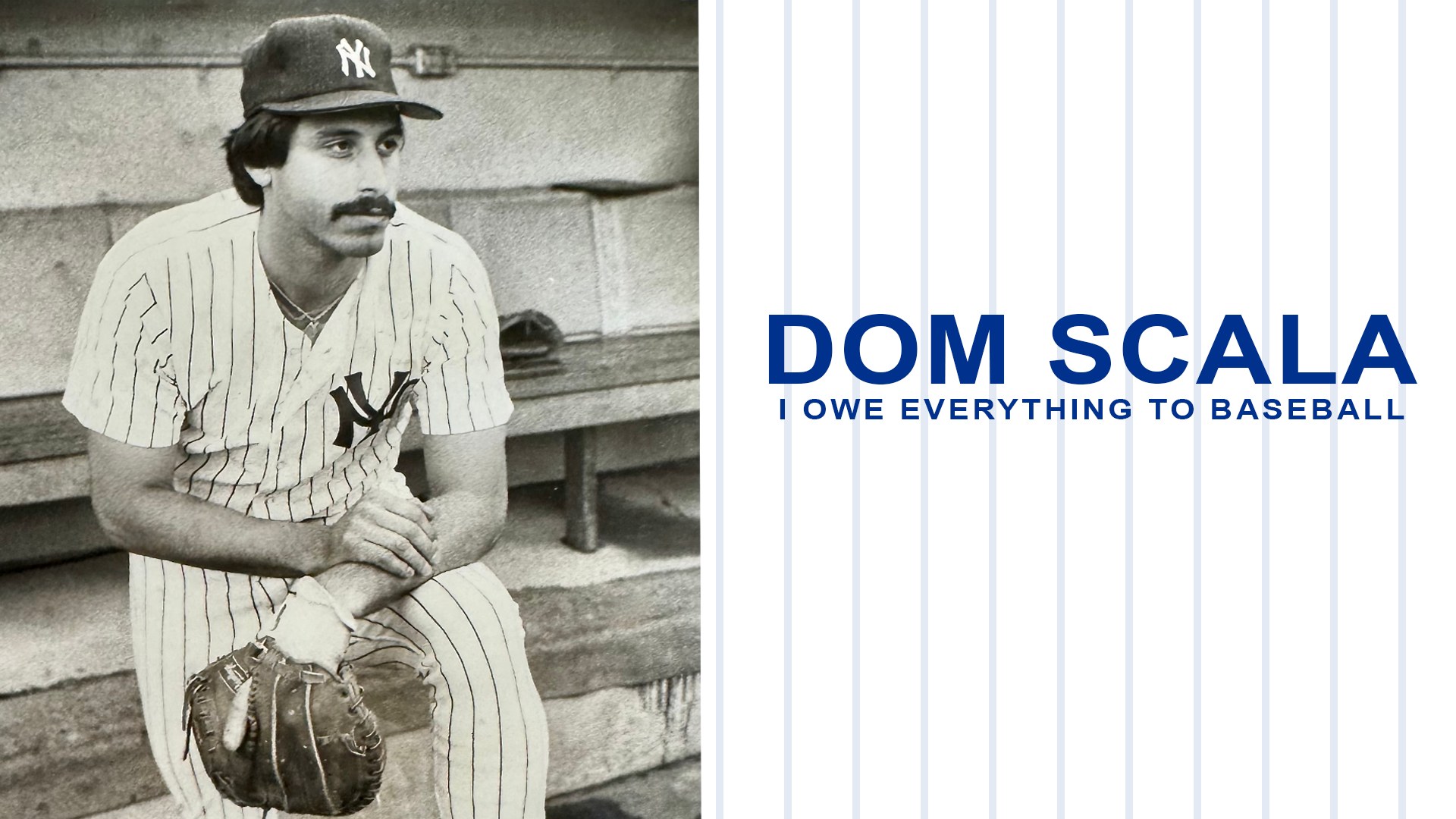
“You have to use your common sense. You got to use your gut. But that’s not what they want.”
– Dom Scala
Table of Contents
Dom Scala Is Here, We Can Start Now
Dom started me off in Fort Lauderdale, at spring training. He was the young man down in the bullpen, the one who hit fungoes, threw batting practice and caught whoever needed catching, because nobody had told him there wasn’t any job he was too important to do.
George Steinbrenner watched from his box, the way he always did. One morning he looked down and said to whoever was standing near him: “Dom Scala is here, we can start now.”
Dom tells it as a joke, and it was one. It was also close enough to the truth that nobody in the bullpen argued with it.
The Arm That Stopped
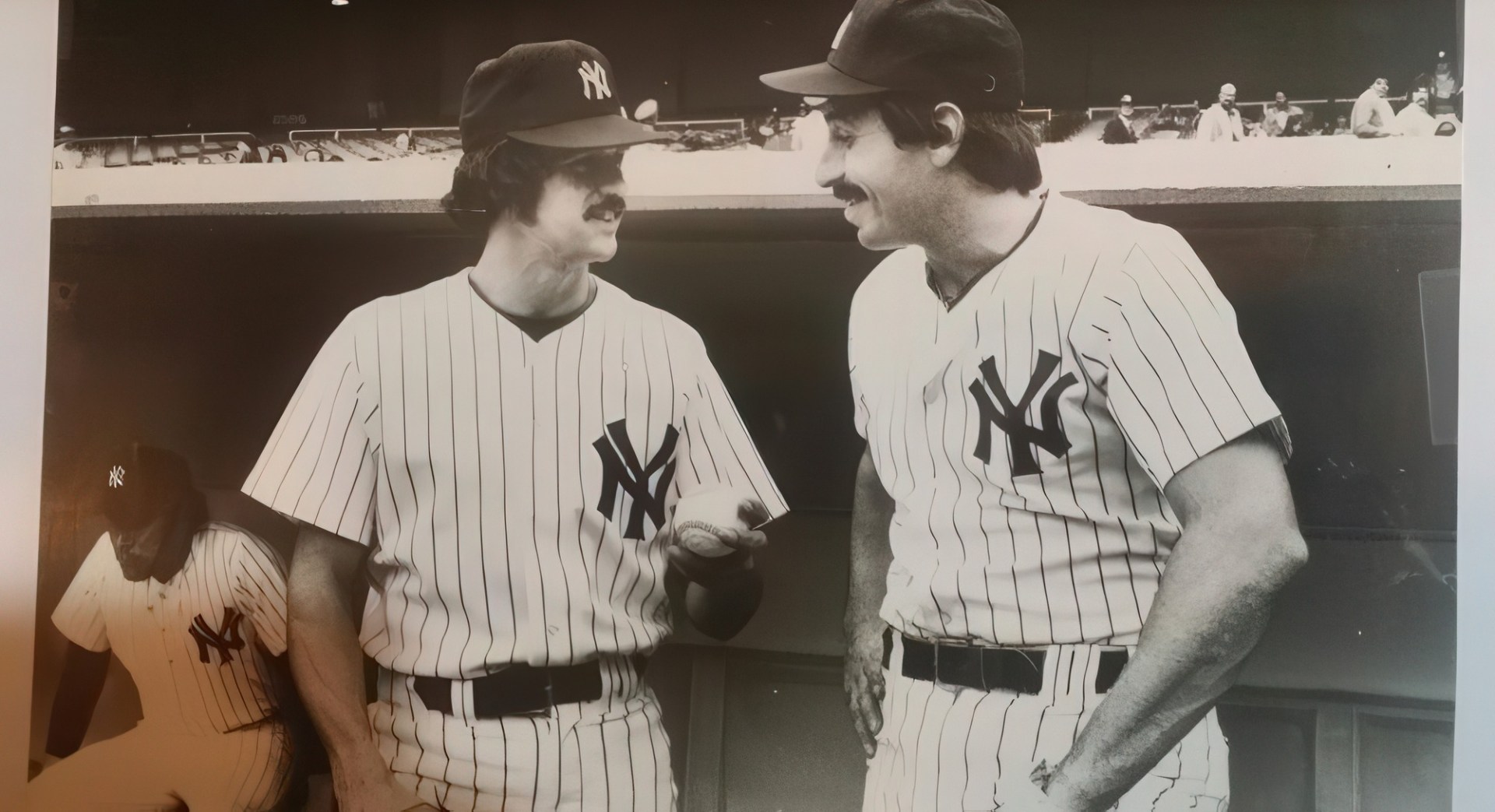
Before any of that he was a catcher at St. John’s University, good enough that Oakland spent a sixth-round pick on him in 1976, his senior year. He went into their minor league system and played two seasons.
Then his shoulder went.
He does not make a story out of it. The injury ended his playing career, and the future he had been building since he was a boy ended with it. He was twenty-two. What stayed with me, listening to him, is that he did not leave the game. In 1978 the Yankees hired him as their bullpen catcher.

Nine Years in the Loudest Clubhouse in Baseball
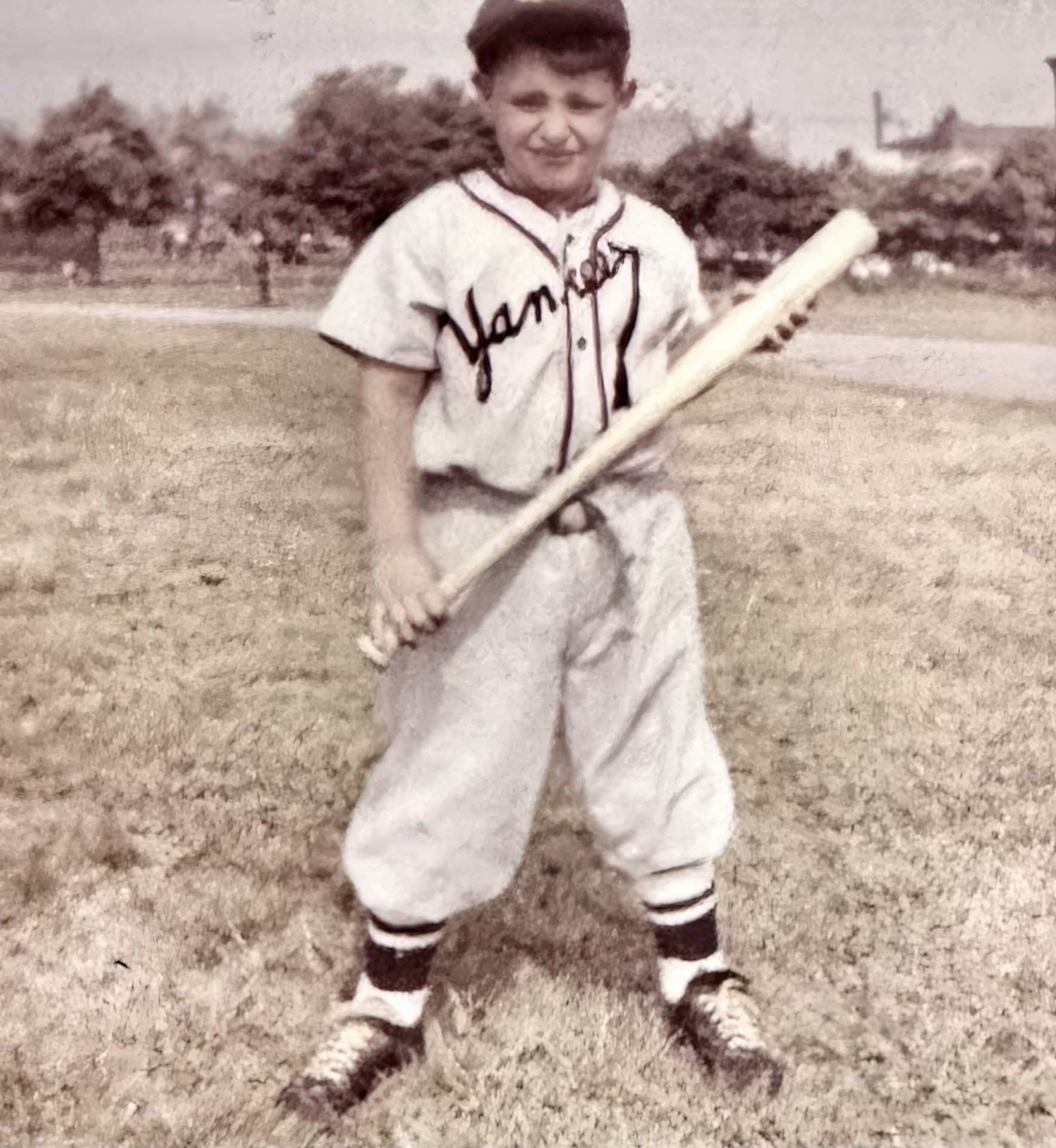
He stayed nine years, and he says himself they were the most hectic years the franchise has ever had.
Bullpen catcher from 1978 to 1981, bullpen coach from 1981 to 1986. He was there for the 1978 World Series and the 1981 American League Championship. He worked with Yogi Berra, Gene Michael, Jeff Torborg, Dick Howser, and with Billy.
“The knowledge I have gained from some of the greatest Major League players, managers, and coaches that have influenced my career is immeasurable,” he told me. Then, more plainly: “You never know who you’re going to meet in baseball. It’s like a wheel.”
He was young and he was useful, and he was standing in the middle of that organization at its loudest.


They Could Not Live With or Without Each Other
I asked him about Mr. Steinbrenner, and he did not start with the firings. He started with the opposite.
“George Steinbrenner gave a lot of people second and third chances through the years,” he said. “And five chances.”
Dom saw both sides of him, sometimes in the same afternoon. This was an owner who, in his memory, once fired secretaries for coming back with the wrong chicken sandwich. He was also an owner who did things for police officers and firefighters and then made sure nobody found out about them.
And then there was Billy.
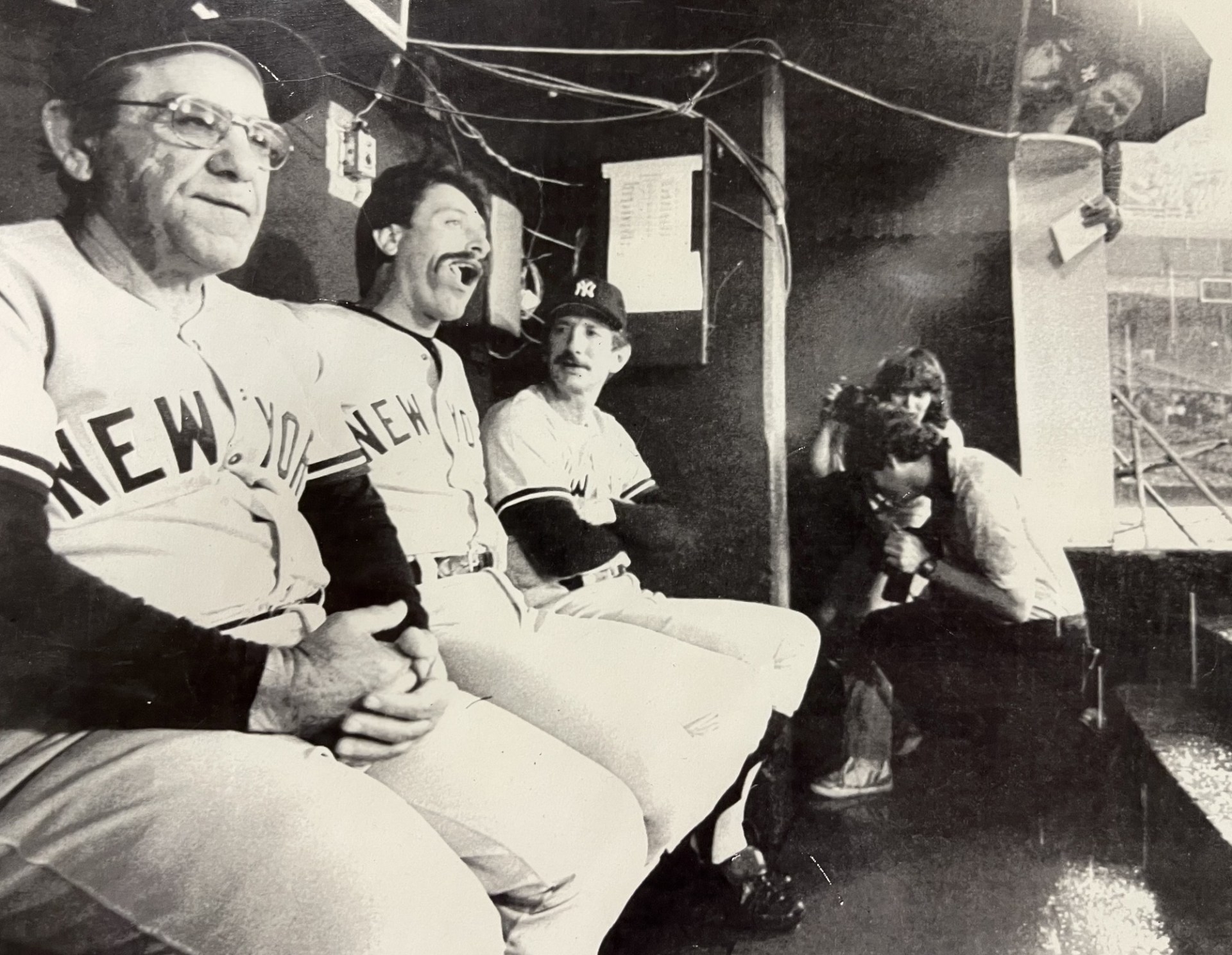
“Those two guys couldn’t live with or without each other,” Dom said.
There was an altercation in Anaheim. Dom was the one who stepped in to help Billy through it, which meant that when the team came home from that road trip he had to go up to the owner’s office. He sat outside and waited, and he admits he was scared. Mr. Steinbrenner saw him walk in and called him Dusty Rhodes, after the wrestler. That was George.
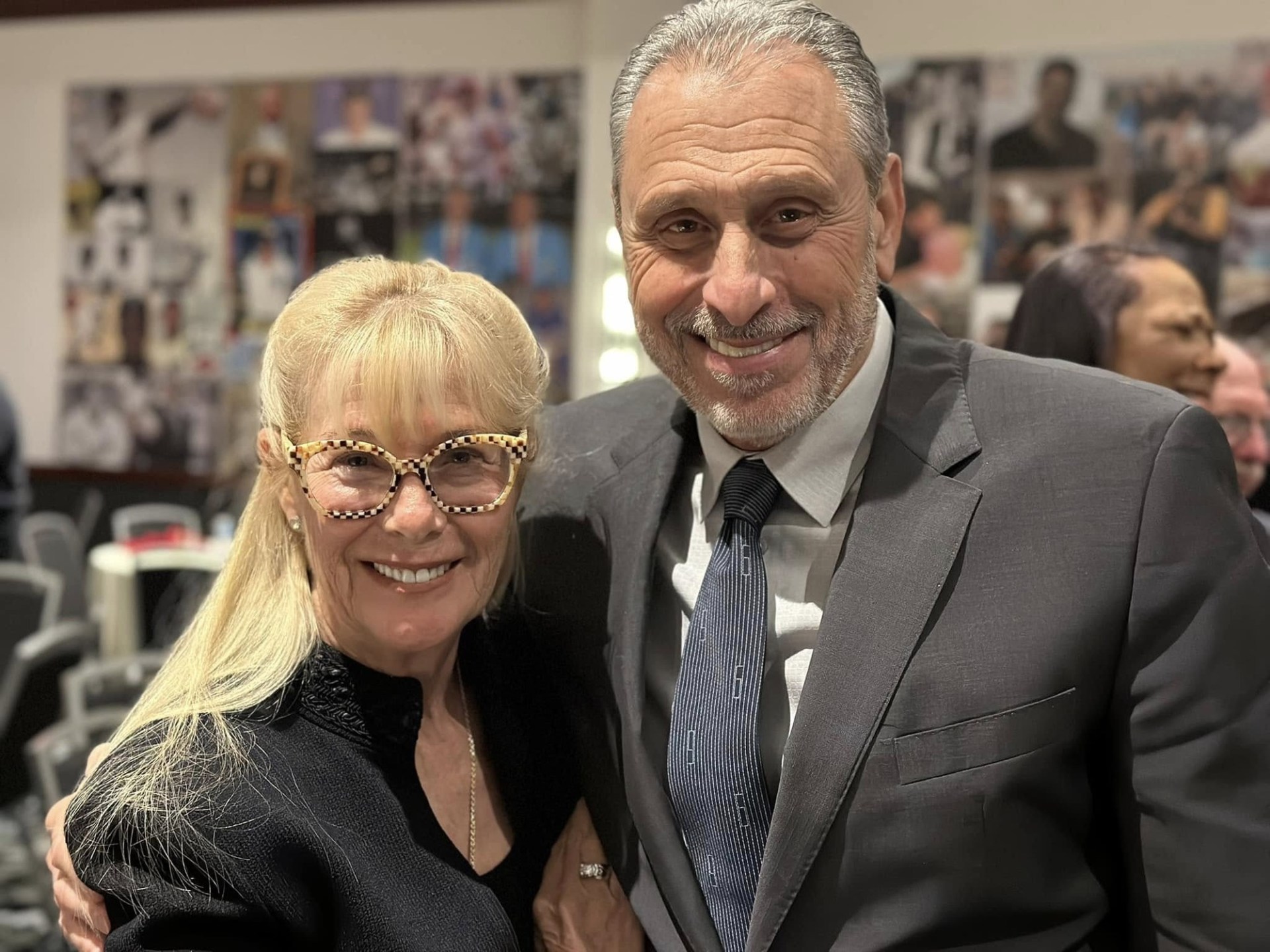
A Harvard Man in Billy’s Clubhouse
I asked whether that generation could manage today. Sparky Anderson, Earl Weaver, Whitey Herzog, Tony La Russa, Billy.
“I don’t think so.”
Part of it is small. They liked to go out and argue with umpires, and the instant replay has taken most of that away. The rest of it is analytics.
“I can just imagine if a guy from Harvard and Yale came down to Billy in the clubhouse and said, you got to do this, this, this and this in this inning.” He did not finish that sentence out loud. He made a face, and anyone who knew Billy can finish it for him.
What those managers had instead was a way of watching. A pitcher in the eighth, up 5-2, still throwing well: you leave him in until you can see with your own eyes that the ball is not coming out the same. Not because a card says he is done.
Dom is not against the numbers and he can recite them. Bunt a runner to second with one out and he scores twenty-eight percent of the time, so nobody bunts any more. Stolen bases went the same way, because an out at second costs more than it used to. The best base stealers in the league now finish around fifty. Most players sit at twenty.
What he objects to is being handed the decision already made.
“I believe you can implement some of the things that they have today,” he said. “But I also believe you have to use your common sense. I believe you got to use your gut. But that’s not what they want.”
I asked whether Mr. Steinbrenner would have liked the new rules.
“No. I don’t think so.”
Four Years Watching Other People’s Teams
In 1987 he left the Yankees. The man who came for him was Syd Thrift, the same executive who had drafted him for Oakland eleven years earlier and who was by then running the Pittsburgh Pirates.
“He was building the club and brought me on because he wanted guys who had experience with winning teams.”
For four years Dom was an advance major league scout and special assignment scout, reporting to a young manager named Jim Leyland, who has since been elected to the National Baseball Hall of Fame. The job was to go and watch the teams Pittsburgh was about to play, and to come back with the truth about them: what they could do and what they could not.
Three Hundred Men, Eighteen to Seventy
Years later Dom worked on a television show called The Tryout with Brian Cashman, the general manager and senior vice president of the New York Yankees, and many other retired professional baseball players. The prize was not a trophy. The winner got a minor league contract.
About three hundred people turned up in New York for two days. They hit, they threw, they ran. They were between eighteen and seventy years old.
“Believe it or not,” Dom said, “some of the people that were like forty, fifty, sixty, seventy years old, they were pretty good.”
Then the practical problem, which he put without any cruelty in it: if a man is seventy, is he really going to get a contract.
They cut the field to twenty-two and put them in a mansion in Bradenton, FL. Hit, throw, run, scored on points. The oldest man still standing at the end was fifty-six.

The Hose at One O’Clock
Dom runs baseball camps for children now, and this was my favourite part of the conversation.
The parents like him. I said so out loud and he got a little embarrassed about it. He has a theory about why.
“They see me and my wife out there with the kids. It’s not like I leave it.”
Here is what that looks like. One o’clock on a hot afternoon on Long Island. The children have eaten lunch and gone back out, and the heat is coming off the dirt. Dom finds the hose, tells his instructors to bring all of them over, and puts them under the sprinklers.
They love it. Then they go straight back out and slide.
“That’s when they don’t like me,” he said of the parents. “When they got mud all over their uniforms.”
“They got to get in the car,” I said.
“Yeah, they got to get in the car.”
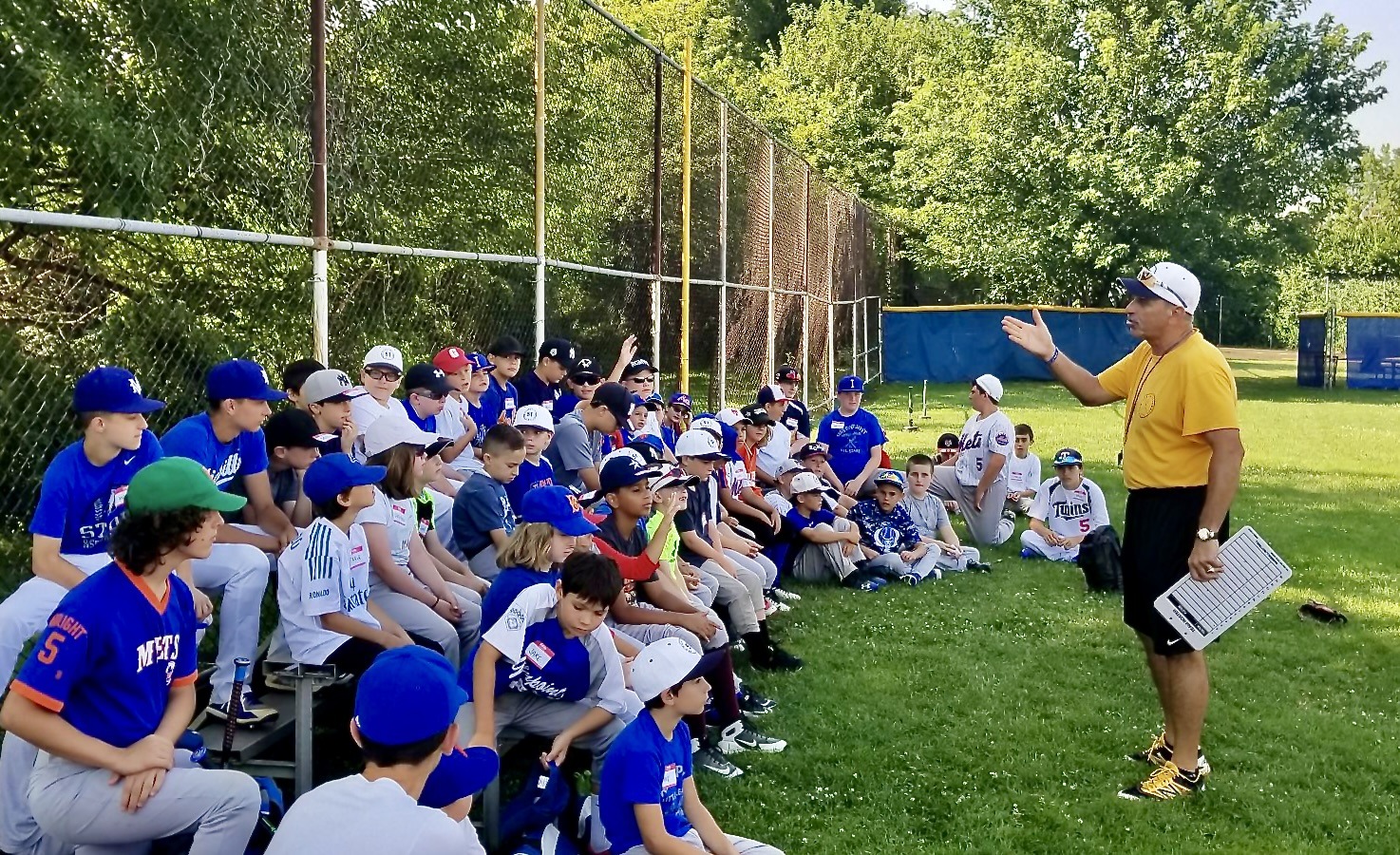
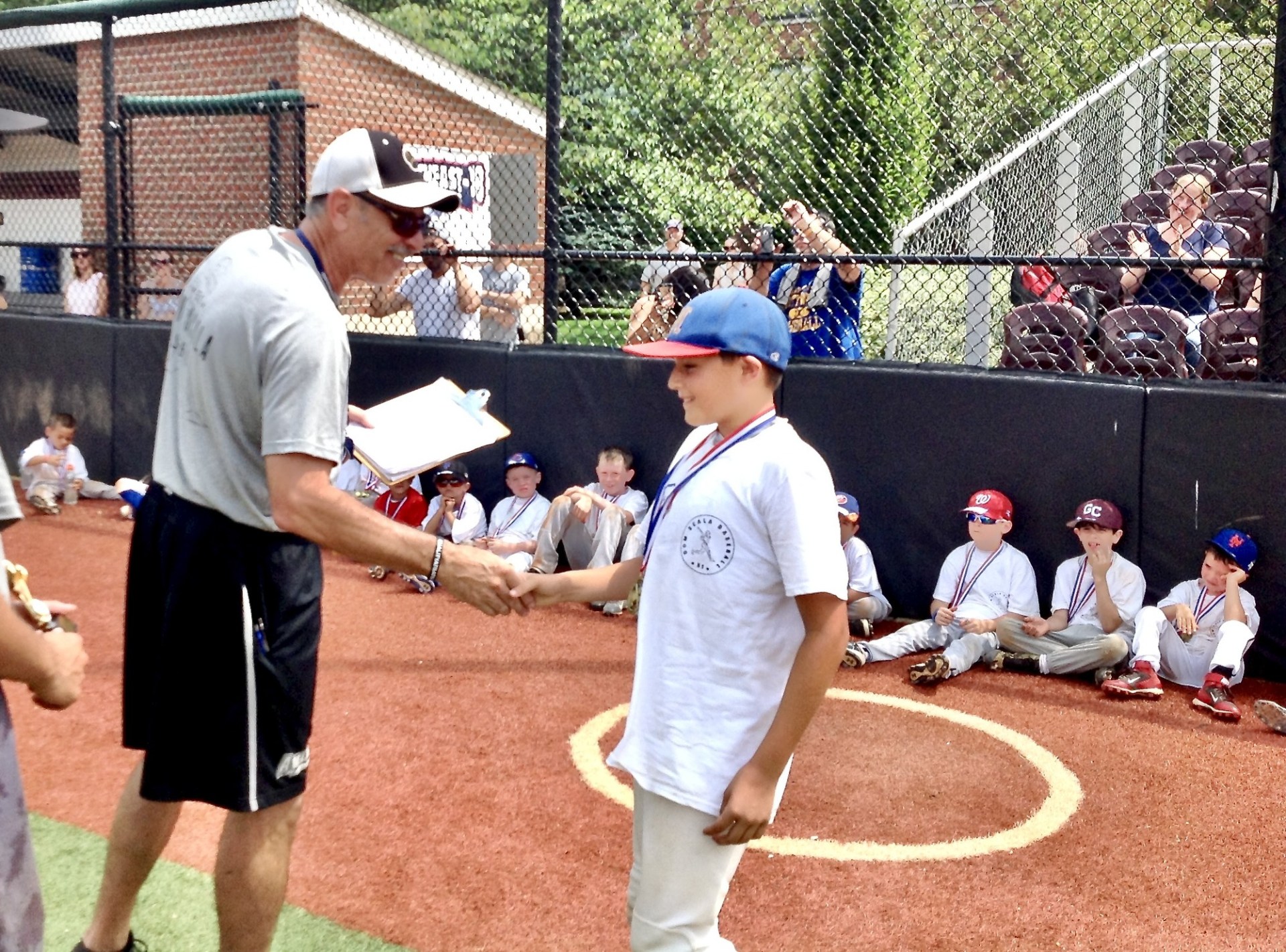
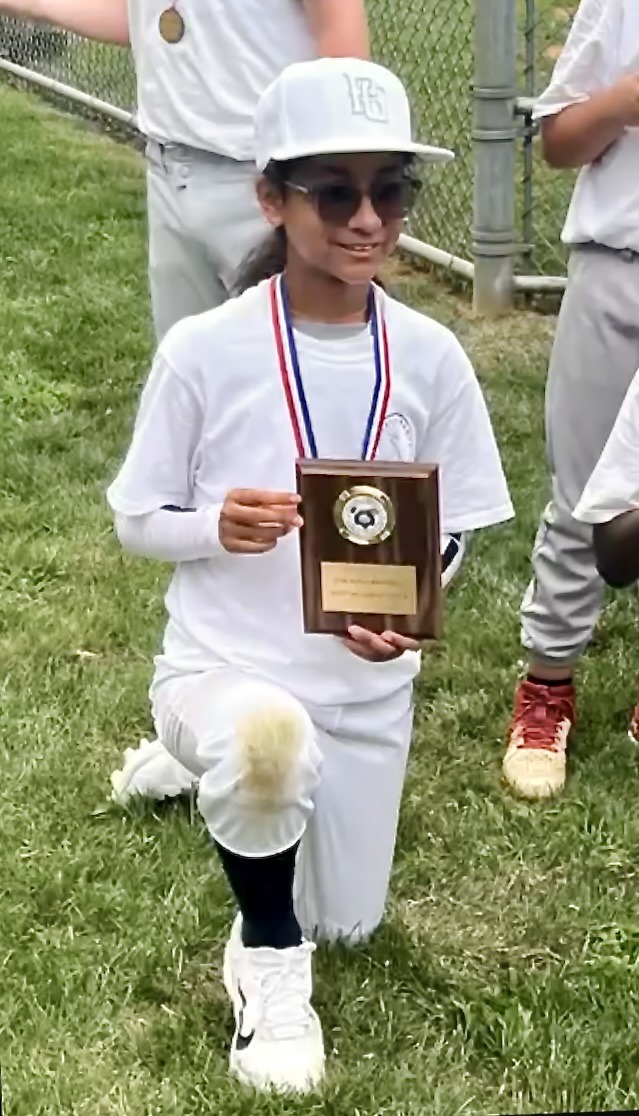
The community is behind him because they understand what he is doing out there, and it is not only baseball. “Get them away from the computers, get them off of the games and all of that stuff. Get them out there for a few hours. Even though it’s hot, let them love being out there, in the fresh air.”

Fundamentals Made Simple
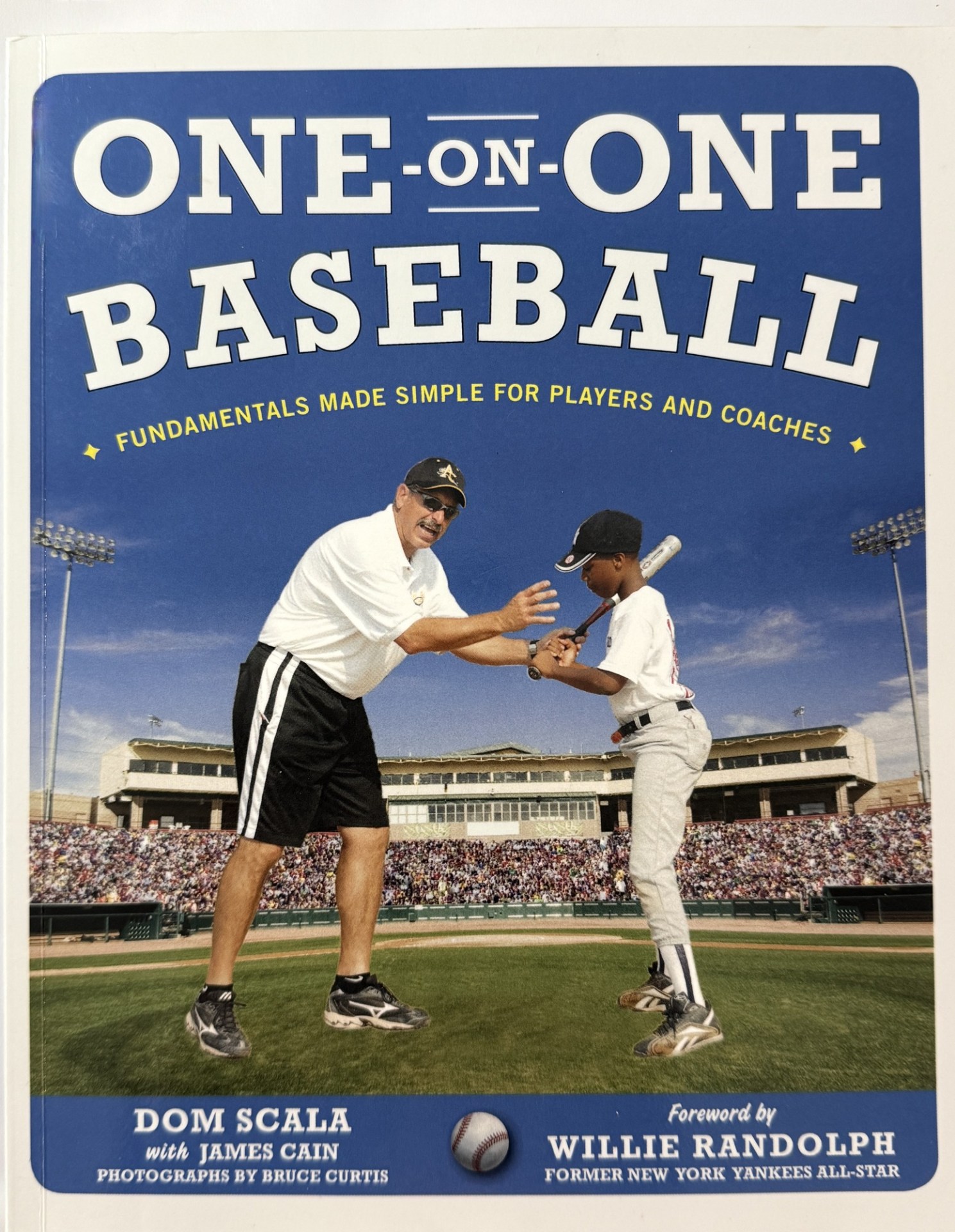
The teaching did not stay on the field. With James Cain he wrote One-on-One Baseball: Fundamentals Made Simple for Players and Coaches, photographed by Bruce Curtis, with a foreword by Willie Randolph, former NY Yankee All-Star. It is the book the title says it is: how to put a young player’s hands where they belong.
He has also given his name and his time to the Italian American Baseball Foundation, where he currently serves on the Board of Directors.
Not the Wins
From 2003 to 2021 he was the head coach at Adelphi University. Eighteen seasons, four hundred and thirty-two wins, three hundred and thirty-one losses, five ties. Three conference titles. Three coach of the year honours. Dozens of his players drafted or signed.


He also raised more than a million and a half dollars for the athletic department, which paid for a new baseball field and, in 2017, the Adelphi Panthers Baseball Team Clubhouse. In 2019 he won his four hundredth game at Adelphi and was named Northeast-10 Coach of the Year. In 2021 he was inducted into the New York State Baseball Hall of Fame, and for the past three years he has sat on its board.


Every time I brought any of that up he moved the conversation somewhere else. He would rather talk about how many children he has got to than how many games he won. Most of them were never going to play professionally, and he says that was never the point.
“We want to win,” he said, “but we also have to be humble in our losses and learn from them.”
He is in the NY State Baseball Hall of Fame, and what he wanted to tell me about was a hose on a hot afternoon.

Special Thank You
Thank you, Dom, for your time, for your honesty, and for talking about Billy and George the way you did. From the bullpen at Yankee Stadium to a field full of soaking wet nine year olds, you have never once thought a job was beneath you.
If you enjoyed Dom’s story, explore more interviews on Worth The Price of Admission: Lindsay Berra: Preserving Yogi’s Legacy, Dennis Martinez: Nicaragua to MLB Legend, Brandon Phillips: A Tale of Resilience and Triumph.
Photo Credits
Photographs courtesy of Dom Scala, except where noted.
Newspaper page: Garden City Life, June 19–25, 2019.
One-on-One Baseball cover photographs by Bruce Curtis.
The Tryout artwork courtesy of the production.