“Never sell yourself short, and don’t be afraid to make known a big ambition… let people know what it is you’re looking to accomplish because I think the more people that are out there that understand what you’re aiming for, even if it does seem outlandish, they’re going to tend to support you, help you, and then their network will also then help you.”
– Doug Payne

Doug Payne: The Architect of Excellence
Some individuals stumble upon their calling by mere chance. Others carve their paths with the precision of an engineer and the fervor of an athlete. Doug Payne embodies this blend; his story is a testament to calculated ambition intertwined with an unquenchable passion for equestrianism.
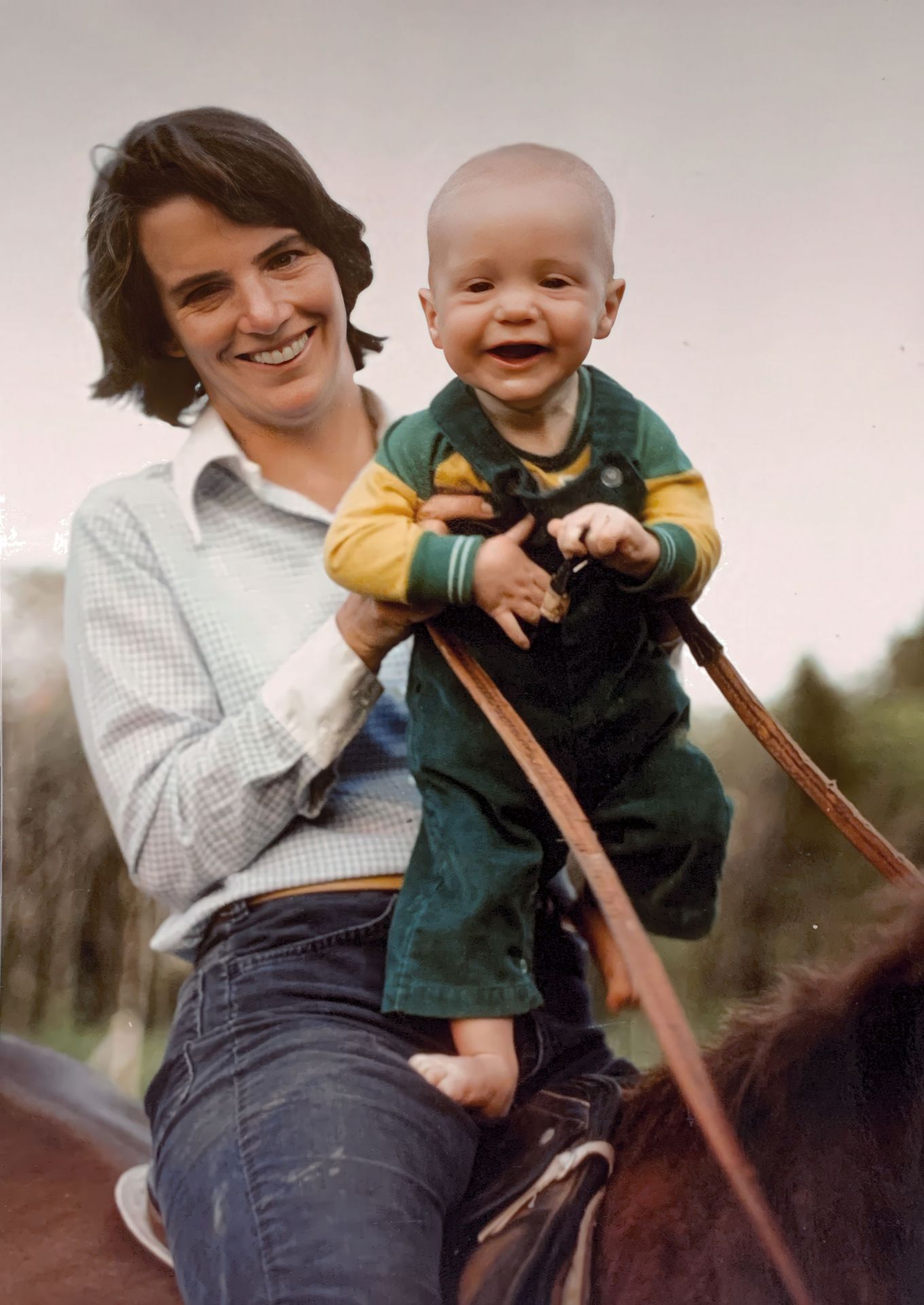
Growing up just ten minutes from Gladstone, New Jersey, Doug did not merely choose riding; he inherited a legacy.
Central to his legacy was his mother, whose passion and expertise left a lasting mark on the sport. She served as a judge at the Olympics not once but twice, a rare and prestigious achievement few ever attain.
Doug’s sister competed in prestigious five-star events, and for the Payne family, horses were more than just hobbies; they were woven into the fabric of everyday life.
By age five, Doug was already riding, and by ten, he was chasing ribbons and awards.
Yet, destiny is not always straightforward.
At the Rochester Institute of Technology, Doug focused on mechanical engineering.
He envisioned a career centered around accident reconstruction and courtroom analysis. His aspirations were clear-cut: graduate, become a forensic engineer, and potentially serve as an expert witness for the state police. It was a path marked by logic and security.
Then came the fateful internship. Doug excelled in every test at the state police academy, only to face an unforeseen hurdle when the New Jersey state budget was put on hold. The waiting stretched on, and the start date never arrived.
During this time, Doug found solace in his first love: riding. He immersed himself in the saddle, training and competing with fervor. A remarkable shift occurred as he realized he was earning an income that rivaled what he would have made as a police officer, all while pursuing his passion for horses.
In that pivotal moment, the engineer’s blueprint for a traditional career shattered. Doug stepped boldly into the world of professional riding. He is not just a rider; he is an architect of excellence, shaping his destiny one disciplined stride at a time.
Doug Payne’s journey is a powerful reminder that sometimes, the most fulfilling paths are the ones we boldly create for ourselves.
Finding the Edge
Doug realized early that talent alone would not suffice. Others had deeper pockets, stronger connections, and pedigrees that stretched back generations.
To survive, Doug needed to innovate. He strapped cameras to helmets when point-of-view footage was still a novelty. This transformed eventing into a visceral experience for audiences.
Teaming up with legendary trainer Jimmy Wofford, Doug produced a DVD that sold remarkably well. While others relied on credentials alone, Doug focused on visibility, showcasing that he had more to offer than just a competitive record.
At just twenty-six, he obtained a judge’s license, which added credibility and insight to his expertise. This decision paid off. Every calculation and decision felt more significant with this new perspective.
Later, when a client suggested he write a book, Doug did not hesitate. He completed the first draft in six weeks. The rewrites, marked in red ink, were harsh but ultimately transformative.
This is the rhythm of Doug’s life: identify the gap, fill it, and move on to the next challenge.
Love and the Turn South
Then came Jessica. A Monday night bowling league in Aiken. A chance meeting that turned into a partnership. She was from Nashville, with roots in the South and a vision beyond New Jersey winters and the endless East Coast grind.
Doug had not initially considered it, but Jess made the case. Together, they chose the Carolinas almost randomly. They rented for a year, then found their farm north of Durham.
Together, they built an operation and a life.
Doug states it plainly: it is probably one of the best decisions they have ever made. Marriage to Jessica was more than just romance; it was the foundation, the partnership that made everything else possible. Without her, Doug is clear, none of it would exist.
The Olympic Moment
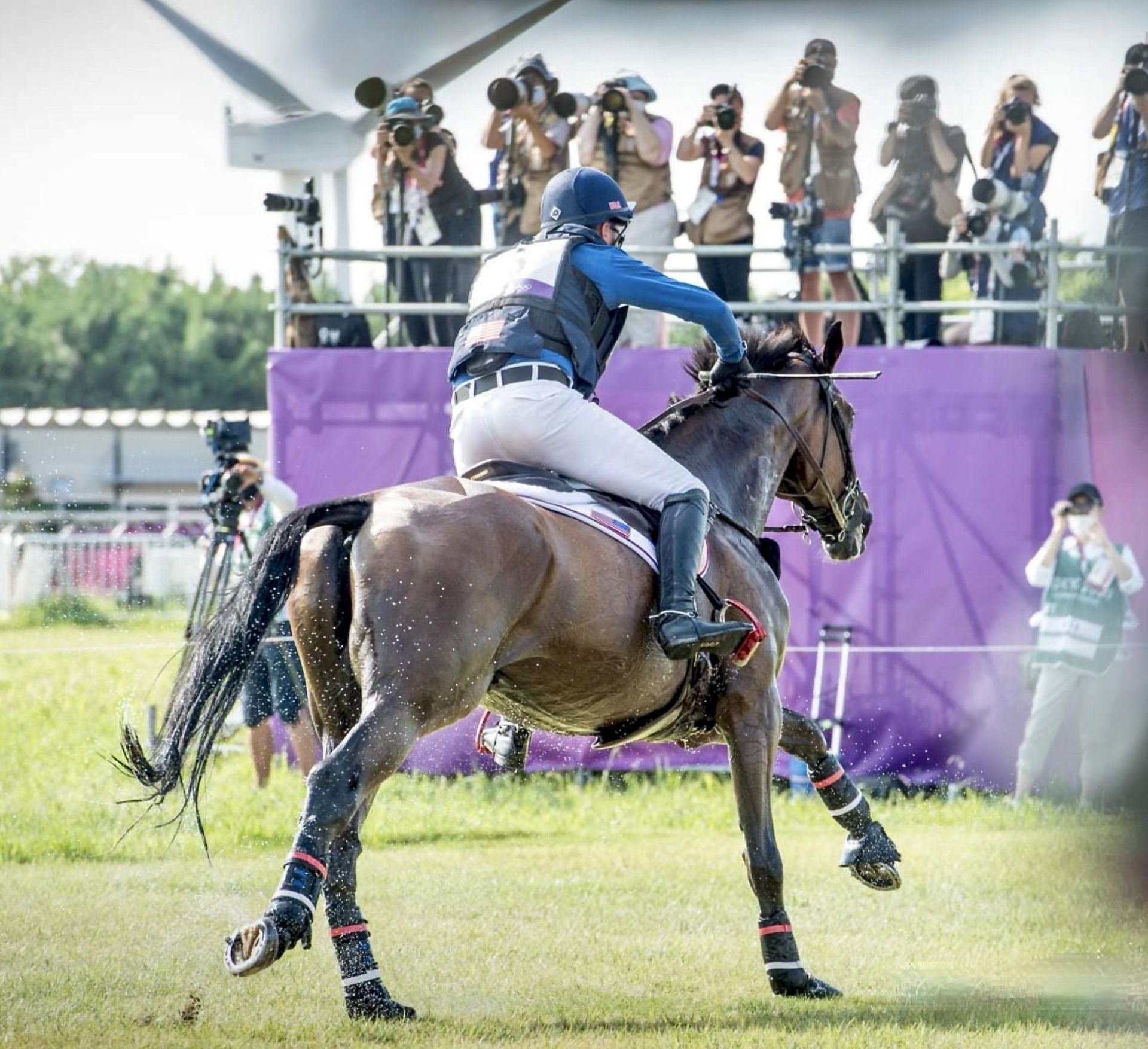
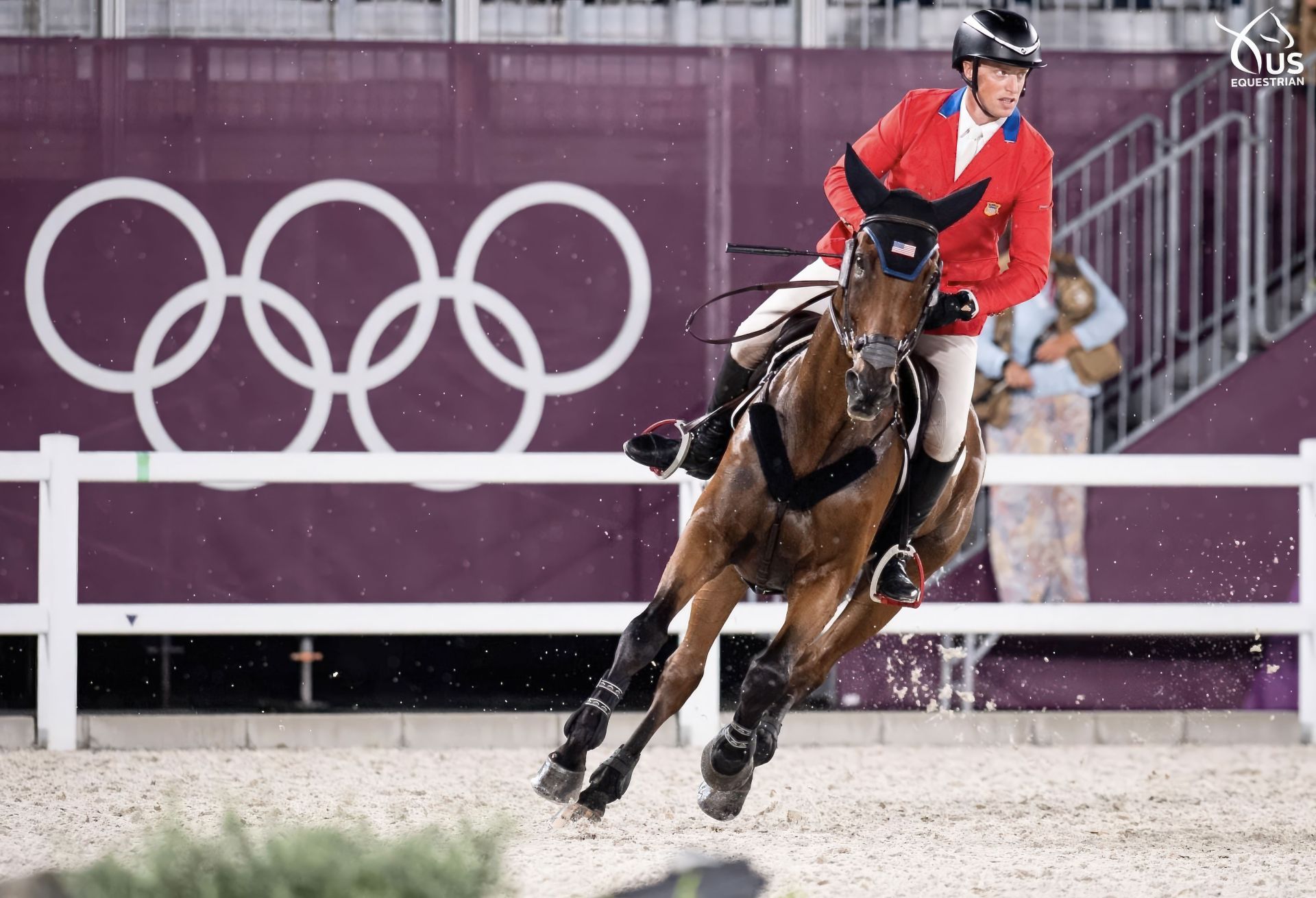
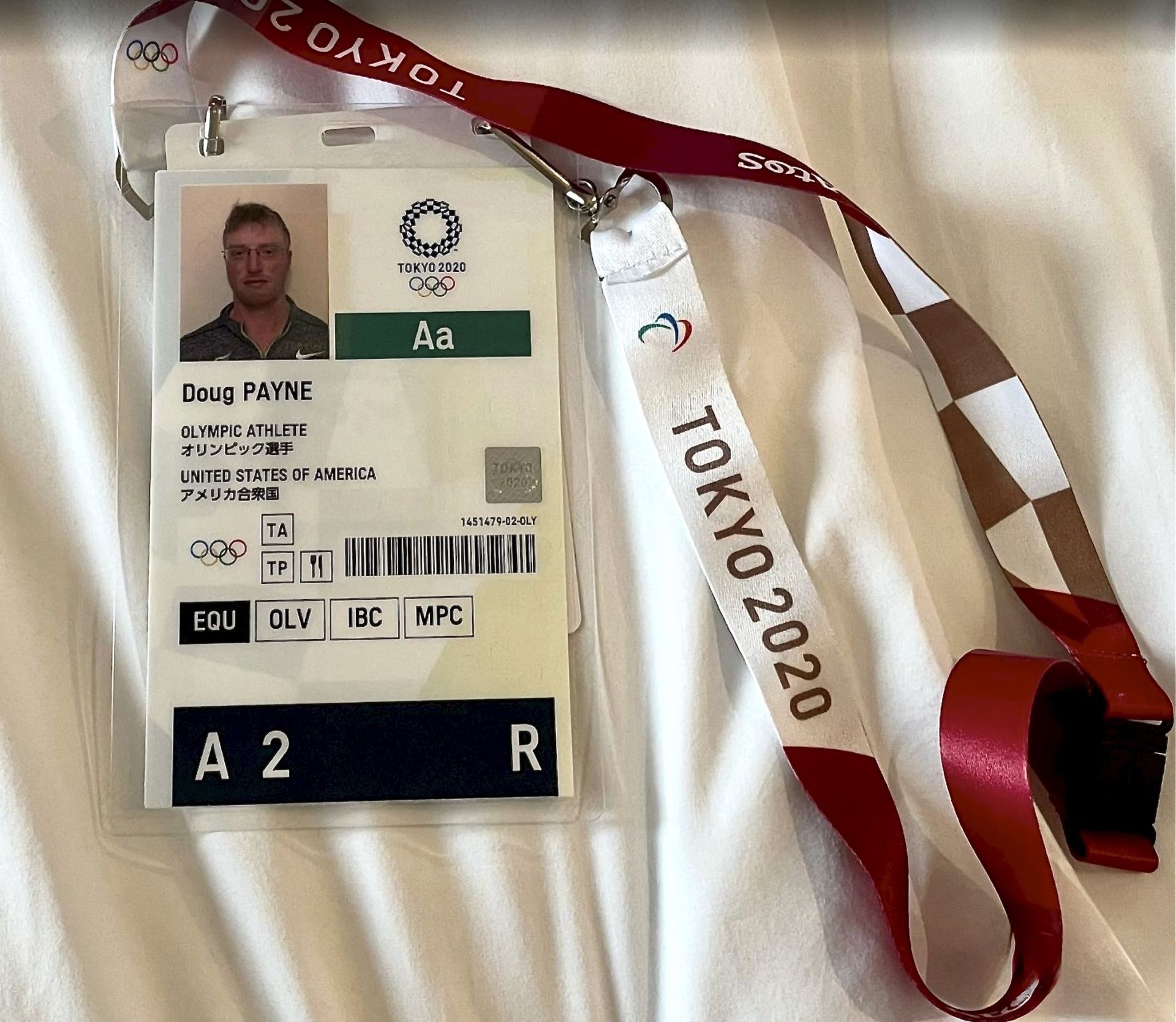
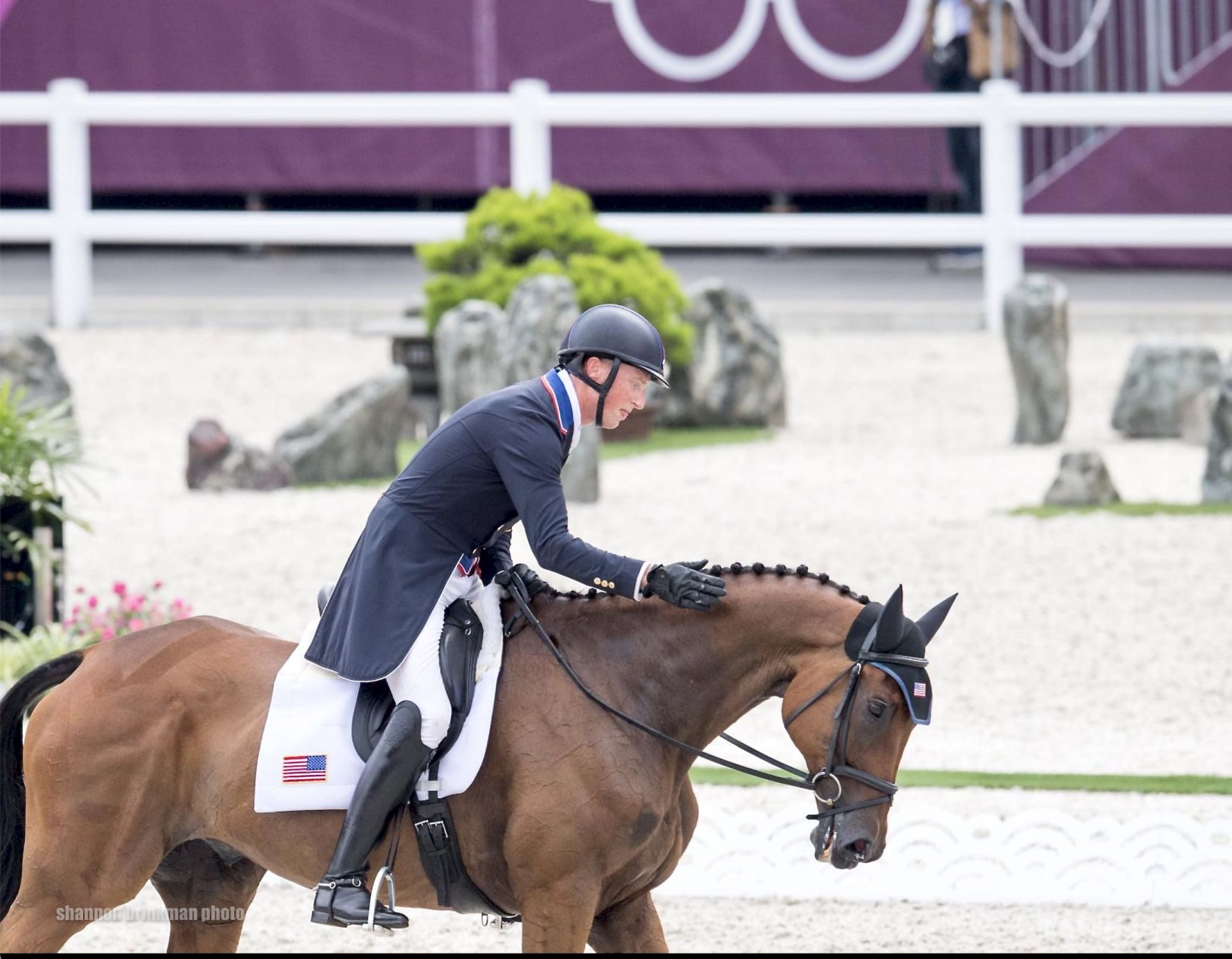
Tokyo. The pinnacle. Doug Payne, astride Van Diver, a horse he and owners Debbie and Kevin Crowley had raised. This was not a borrowed horse or a quick fix; it was a true partnership, built over years of hard work and trust.
The selection process was tough, allowing only three riders and a reserve in the new Olympic format. There was no room for error. Every competitor had to perform at or near their dressage score.
Doug and Van Diver’s record, five-star competitions without jumping penalties, and their consistency under pressure reassured the selectors.
But Tokyo itself was unlike anything Doug had ever faced. Daily COVID tests. Hotel confinement. The constant fear that one positive swab could erase decades of preparation in an instant.
He had built his entire life for this moment, only to feel it constantly threatened by forces beyond his control. Still, he rode. And when the results came in, Doug emerged as the highest-placed American. It wasn’t the gold he had dreamed of, but it was something more meaningful: proof that, when the stakes are highest and the pressure overwhelming, he rises to the occasion.
The Pivot
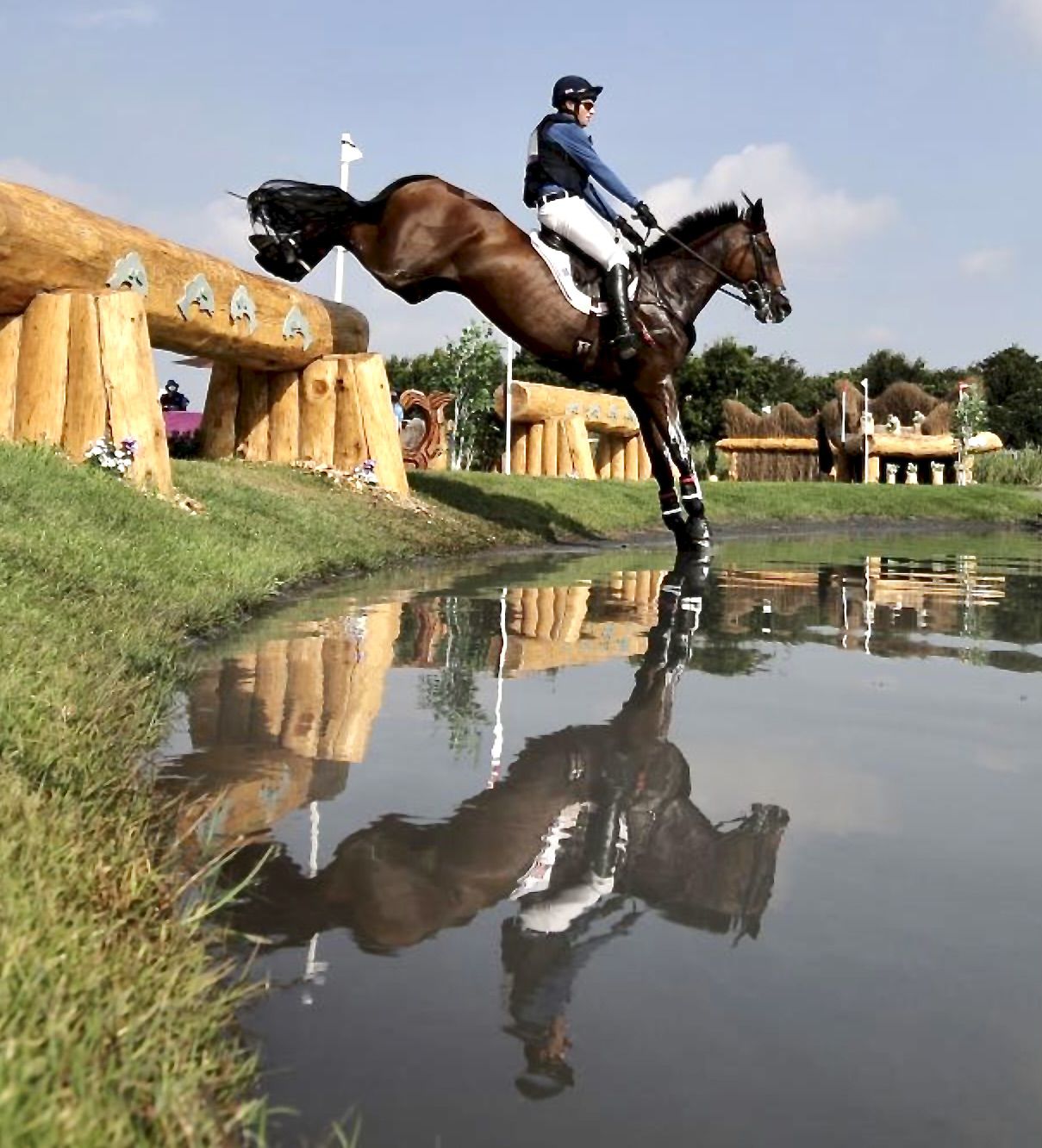
After twenty years of three-day eventing, international competitions, and relentless travel, the story began to shift. The catalyst was a horse named Quintessence.
Bred for eventing, but his instincts told a different story. His meticulous, careful jumping didn’t suit the endurance grind of cross-country. Owner Jane Dudinsky agreed to try him in the jumper ring. He won the six- and seven-year-old finals, then moved into Grand Prix competition. The seed was planted.
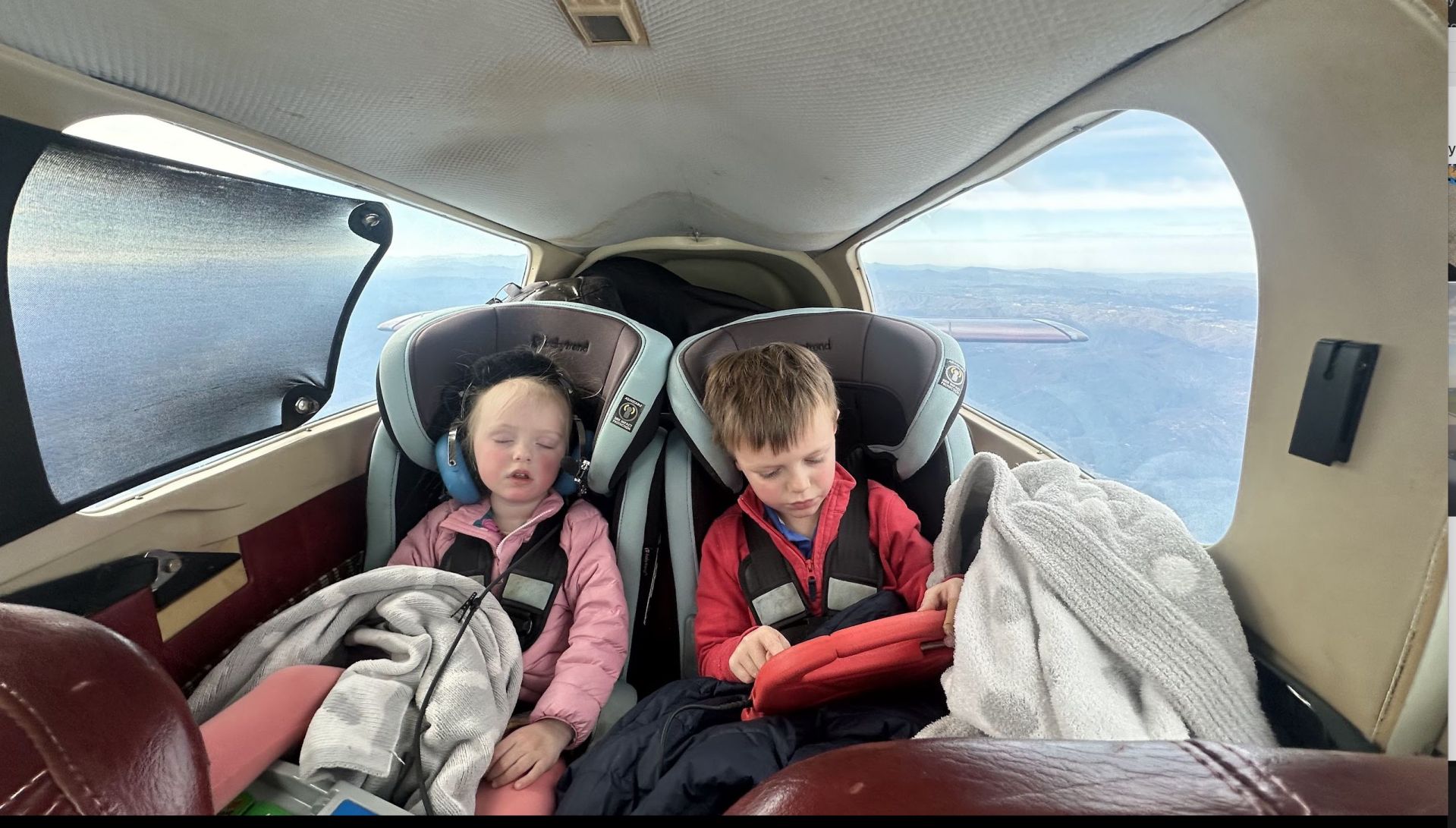
Now, with children traveling alongside them, forty to forty-five weeks on the road became unsustainable. The math changed. Jumping offered intensity, flexibility, and financial opportunity.
So Doug did what he always does: recalibrated and attacked the new challenge with full force. He refused to be labeled as an outsider, a former eventer dabbling in jumping. He would be proficient. Competitive. Excellent.
He is almost there.
And that small chip on his shoulder, feeling he is not quite good enough yet, is precisely the fire pushing him forward.
The Unexpected Skills
Doug does not just stop at horses; he takes to the skies. He is a licensed pilot. He flies planes. Why? Because the math of flight has always fascinated the engineer inside him.
Holding four reins in one hand while balancing a mallet and a selfie stick on a polo horse felt natural.
After Hurricane Helene, he flew relief missions and coordinated with other pilots.
Doug and other volunteers dropped hay bales into stranded fields from skydiving planes when bridges were out and spent hours at small airports, calculating weight loads and choosing landing zones amid storm damage.
This is Doug: endlessly capable, endlessly curious.
Always growing. Always helpful.
The Philosophy
Ask Doug what makes him laugh: sarcasm and directness. Ask what makes him angry: dishonesty, hedging, and deception. In horses and in life, he prefers hard truths.
His advice to young riders is simple: do not sell yourself short. I encourage you to speak your ambitions aloud, even if they sound outlandish. Because when people know your goal, they help you. Networks open. Knowledge flows. Keep it private, keep it safe, and you will never receive the help that could have been yours.
This is the voice of a strategist. Someone who learned that visibility multiplies opportunity.
What Remains
Today, Doug trains dozens of horses and manages a facility alongside Jessica. He not only oversees client relationships but also mentors young talent, with two of his children accompanying him to competitions as he develops prospects for future teams. With each passing day, his horizons continue to expand.
When asked about his biggest challenge, he reveals that it is not technique, time, or talent, it is money. Finding and nurturing exceptional horses demands substantial financial resources.
Even with adequate funding, discovering the right partner horse remains difficult. Building the partnerships necessary to finance his dreams and compete at the highest levels is an ongoing puzzle.
Yet solving puzzles is Doug’s specialty.
He is an engineer who became an Olympian, an eventer who transitioned into jumping, and a rider who has also ventured into writing, judging, piloting, and mentoring.
He is the farm kid who trusted his instincts even when logic suggested otherwise.
And Doug is far from finished.
Not even close.
This is what makes his story worth following as it continues to unfold.









Read the full Transcript
[0:00] Hello, I’m Jill Martin, your host for Worth the Price of Admission. As a concert photographer, I had the incredible opportunity to capture unforgettable moments and connect personally with some of the most extraordinary people of our time. I’m deeply inspired by how individuals overcome obstacles to achieve their dreams. Join me as my guests reveal their unique journeys and untold stories, giving you an intimate look behind the scenes of their lives and explored the unforgettable experiences that have shaped who they are today. Each episode is crafted to inspire, educate, and entertain. So sit back and get ready. Every story is worth the price of admission.
[0:49] Hi, I’m Jill Martin, and today my guest is the multi-talented U.S. equestrian Doug Payne. Doug was part of our U.S. equestrian team in Tokyo in 2020. He and his wife, Jessica, own and operate an equestrian facility in Rogemont, North Carolina. He’s also a pilot, where this summer he went to help with the incredible relief effort for Hurricane Helene. So sit back, and we’re going to find out what makes this guy tick. Doug, thank you for coming today. I’m very glad to have you. Very honored, yes. You’re here for a couple of weeks. Yep. Uh-huh. And we’re going to backtrack a little bit. So how did you know you wanted to ride? Going way back. It wasn’t, yeah, I don’t know. It was not a conscious decision that I woke up one day and said, I don’t want to do this. But we were very lucky growing up on a farm. It’s been in the family business forever. My mom’s a judge. She’s a judge at two Olympic Games, both Rio and Hong Kong. So it’s just something that in the end, walking out the back door, was kind of the natural thing that everybody did, basically. And how old were you? Oh, I would have no idea. I don’t know. Five? You know, whatever, by the time you got on the first time. But, you know, on a competitive side.
[2:07] Probably, what, 10-ish ballpark, I would guess. You know, just something early on. It’s not certainly lucky enough to say. I couldn’t remember the very first time I was on a horse, but. My sister and I both rode through Pony Club and initially for fun, and then you start to get more competitive and drives you to do more and get deeper in. And mom and sister, everybody’s still in the game. Yeah, my mom’s still actively competing and judging. And my sister, she’s ridden through Five Star as well. And she’s got a business up in New Jersey. Both are still living up there. And that’s where you grew up. Yeah, so we grew up probably about 10 minutes from Gladstone, a little town called Oldwick.
[2:54] Born in Marstown, so about an hour west of New York City, half hour from Pennsylvania. You went to school there for how long?
[3:03] Well, high school there and then went to college at Rochester Institute of Technology. And you have a degree. Degree in mechanical engineering. And why did you choose that? Great question. Always been math and science interested, basically. Never thought i’d be writing professionally i thought i’d kind of just do this on the side and just as a recreational side of it and engineering allowed for just a wide range of options and the financial implications would be good graduated college thinking i would do just that i didn’t, i guess going back a bit they had a ran on a quarter system at the time rit did and so starting your second year you interned with different companies so two of those companies or two of those quarters rather i worked for a forensic engineer did accident reconstructions and had a great gig going very interesting the only catch either had to be a phd or go through the state police to get into basically admitted to court as an expert in your field didn’t want to stay in school that long to get a phd so i figured i’d go through the state police and um.
[4:13] After a series of academic cognitive personality tests, physical tests, whatever, was admitted into the academy, but the state went bankrupt. They kept pushing the start date off. And so in that interim six-month period, you know, I wasn’t just going to sit around and do nothing. So I started riding more and more and got to the point where I was roughly making what I would make starting there. And who did you ride with as a kid? A really wide variety. we were very very lucky where we grew up just outside the team and so of course my mom had a huge influence but my mom ran the local pony club and so we were very very lucky to have then, her network to tap into for instruction so uh roger haller who had he’s a long-time official and was designer of the essex three-day was there sally ike was an instructor we frequently had, And Virginia Jenkins at the time, there was, I mean, it was just a laundry list of people. And then, you know, later on, you know, a bit with George Morris and then Ann Krasinski was quite close. So, wrote with Ann for quite a while in the earlier years. Tough instructor, she is. Yeah, but I appreciate that. Just direct to the point, get it, you know.
[5:32] You’d rather not beat around the bush. Because if you’re there truly to improve and to learn, there’s no point in getting a coddling direction. You know, just make it happen. And when you were showing in that area, of course, the shows were abundance. Did you have a favorite?
[5:51] So in growing up we were primarily eventing with some dressage i actually didn’t go to my first straight jumping you know show jumping competition till early 20s i would say, but we were lucky enough my dad helped build all the cross-country courses at the essex horse trial and so a lot of my early memories were at the usct just hanging out and having fun flagging courses, mowing, whatever it might be.
[6:19] And, you know, that always was the, certainly the pinnacle of our childhood was riding there. And, you know, it’s pretty wild. You walk down the main barn and you see the plaques on the stalls of all the Olympic horses. It’s, um, or go up to the trophy room, glass dance floor, awards everywhere. It’s, um, yeah, a very, very special place. And we’re lucky to be there frequently for sure so why did you choose at that time because mom was into three day and sister was into three day is that why you guys stuck to that i guess so yeah it was just what we did you know and i think through i don’t i think they’ve changed a direction a bit now but through the u.s pony club it was more eventing centric than not at least it was in our experience and so you know having.
[7:10] Varied skill set I think was advantageous so you know I think it’s a it was a wonderful way to start and, It obviously took me places I could have never dreamed of, really. That’s for sure. And some beautiful courses. You rode three-day for a very long time. And you mentioned earlier that you started to make more money than what you had gone to school for. How old were you when you started working as a professional? So it’s pretty interesting. In the jumping world, it’s much more segmented, either amateur or professional. The lines are a lot more blurry when it comes to eventing.
[7:47] So i was riding horses for people you know i guess you could say professionally it wasn’t my only income source right but even through it really paid my way through college and yeah so quite early it wasn’t uh you know in in the jumping side of it so much like okay now you’re going to step in and you’re going to be now a professional and that was those lines were very blurry and there was really no advantage one or the other the jumping side there certainly is um a distinct, difference in the competitive arena and the eventing world everything is joined right together and so i would say you know technically probably quite early was a professional but standing on my own you know our deal always growing up my parents were we were very fortunate right we had my sister and i both had one horse each and then when we graduated high school we had to sell whatever we had and kind of on our time from that point forward and so you know it’s pretty interesting, situation i was very very lucky speaking back at the usct uh jimmy wofford was one of my biggest mentors growing up and he used to run a um a training camp in the middle of the winter for young riders you know sort of a development idea for the area or zone equivalent and they held it at the USCT, which was absolutely wonderful. They allowed us to stay up in the, there’s apartments up over top. I think actually now they might be office space.
[9:11] But it’s a beautiful place. And I got to say, he sadly passed a couple years ago now, but, His strike rate was astounding. I mean, I think of the core group, I look back at some pictures. I mean, I would say probably 80% of the people that were there are now still, you know, professionals making a difference. So that was, yeah, super special for sure. And you did a dvd together yeah yeah that was kind of early on there was now sort of gopros or point of view cameras are pervasive but they were um, seldom seen maybe in race cars or whatever it might be so.
[9:55] Engineering degree obviously comes in handy in that regard and so we could splice together some components so i basically custom made a system to be able to do this and thought it might be you know huge advantage and and help so yeah put together a dvd with with jimmy that um yeah it really honestly sold very well you know for its time and early on you’re looking for an edge or a way to differentiate yourself because you know there’s a lot of a lot of options out there and and that was one of the other things that pushed me into officiating i got a judge’s license at 26 and it’s just trying to figure out a way early in your career to show that you have more than just what your competitive record would say how do you like judging you know is it helped me more in the competitive riding arena than I could have ever imagined. You know, the actual sitting in the box judging, it’s interesting, but it’s certainly very time consuming. And, you know, at this stage in the game, with the number of horses and clients that we have, it just makes it really difficult to continue. So when did you branch out away from New Jersey, running your own business?
[11:16] So met my wife, Jess. We met in Aiken. And crazy enough fact, she was quite good friends with her mom before I even knew Jess. We had a Monday evening bowling league, basically, of everybody when they came, migrated down from the winter season. And dollar beers and, you know, pretty relaxed atmosphere. So anyway, I was on Joan’s bowling team. How did you get on Joan’s bowling team? I have no idea. It’s a great question. I don’t know, but Joan doesn’t know a stranger. So we, yeah, so Joan and I hit it off and we had a great time there. And yeah, one thing leads to another and… You know, we got together, but Basie just grew up in Nashville. She was born in Canada, but I grew up in Nashville, and I was in Jersey at the time, and we got together. She moved up to Jersey for a bit, and she said, I really think we should consider moving south or somewhere other than where we are now.
[12:15] And it hadn’t really crossed my mind, but, you know, she put a pretty compelling argument to doing it, And it’s probably one of the best things that we’ve ever done, I think. And when you met Jess, what was that like? Did you think she was the one? I don’t know that you ever know of like right from moment one. But yeah, she’s an incredibly special person. And without a doubt, sort of the other partner in crime that frankly, there’s no way we could be doing what we’re doing without that partnership together. And so did you guys start dating right off the bat when you, you know, who won the bowling match?
[12:59] Pretty soon after. Pretty soon after. I don’t know. We had a dinner. We were supposed to go to a restaurant. And then for whatever reason, it was closed. So we came over to their house. And I guess that was the initial spark. And yeah, one thing leads to another. You know, she had a brief stint back at school. So we, you know. And you competed against each other as well? Did you? Yeah, yeah, yeah. One, yeah, it was probably my first five star actually was, uh she’s she’s ridden through five star as well and it was it was great actually carl her dad said if i really loved her i would have had another rail and allowed her to beat me, it didn’t happen didn’t happen that way.
[13:36] What’s the best piece of advice that’s ever been given to you for the business you know i had a uh, A woman that helped an incredible amount, both, she’s a dressage rider, Heather Mason, her name is, but also she was incredibly good with tricky horses and initially, again, looking for an angle, an edge, a difference, the first, call it 10 years of my real standalone professional life was riding tricky horses.
[14:09] I still remember to the day that i talked to her and i said look i’m i’m gonna push off this academy thing i’m just gonna straight ride so if you hear of anything anybody need anything i’m i’m all on board she goes do you really want to do this and i said oh yeah i mean yeah because it’s never gonna be easy and and without a doubt she’s absolutely right about that but i think the challenge, that is figuring out each of these horses, their strong suits, their weak suits, what makes them tick and then how you can help them is to me is incredibly motivating and.
[14:46] Pushes you to continue to try to get better with all this learning you decided to write a book yeah last thing i ever thought i’d be doing in life that’s for sure i’ve made it through engineering school i think the longest paper i ever wrote was 10 pages and it was about the patriot the movie so of course i was never a huge bookworm by any way shape or form but yeah i had a client and good friend that we wrote an article that was kind of a very short form of the book that was profiled in Practical Horseman. We happen to have that book here. Oh, perfect. Yeah, and then the publishers called me up and said, would you like to expand on this and write a book? And again, in the same theme as we were talking about with the DVD and judging early on is for sure it was a massive undertaking and absolutely put me out of my initial comfort zone. But I think I learned a lot while doing it and then of course having that out there was just a huge asset How long did it take?
[15:54] You know, I would say the initial draft was, call it six weeks, I’m guessing. I will tell you, the rewrite took forever. My first draft that came back was just like pure red. Yeah, I think it was roughly 60,000 words. And yeah, it was a monumental task, but one that in the end has just been wonderful. And, you know, it’s the publishing side of it is once you put all this work into it and, you know, you’re probably a year in by the time it’s actually legit getting pushed out the door. And then, you know, the published date comes and then it’s just like you let it out and hope for the best. You know, that’s a nerve wracking couple weeks, months, whatever, till you start to get the feedback. You want to do it again? Not yet. Not yet. Oh, but that was a yet. Time consuming. I mean, right now, the hardest thing, our kids are five and seven, so free time is, without a doubt, a challenge at the moment. But I wouldn’t be opposed to. And so you have two kids. Yep, two kids. They have Hudson and Abby, so they’re, yeah, just turned five and seven. Horse interest? Abigail is obsessed, and we were hearing all of this week that she really needs a pony. We’ve been not pushing that at all. Sorry about your luck, Dad.
[17:20] I think it’s one of those because it’s without a doubt a challenging.
[17:26] Task i you know if they are interested motivated and want to do it we’ll support them without a doubt i would have no part in having them pushed into or feeling pressured into riding because i think that’s there’s so much time effort, everything involved and if it’s if you’re not self-driven or they’re not really motivated themselves, the last thing you want to do is have them resent it you know that’s true and so what about teaching them would you and Jess teach them would you send them to somebody would you have somebody come in yeah I don’t know it’s certainly a bridge we haven’t.
[18:07] Arrived at yet i mean i wouldn’t be opposed to it you know my thought and at least how we grew up was initially it was just fun just bombing around bareback around the farm so i would expect.
[18:21] You got to enjoy it and and really understand kind of the basics what it’s all about and i think in a pretty natural way and then if they want to get a little more precision to it then we’ll figure out a way to to help them yeah i got the wonderful opportunity to spend a little time with them and yes they definitely love to have a good time oh yeah and they want to experience everything and they think mom and dad are the greatest that’s a good thing yeah it’s a good thing we’re very lucky and then i don’t know hudson maybe he will maybe he won’t i don’t know that i was at his age totally driven wanted to be out in the barn 24 7 i’ve probably had an interest in other things but he’s right now it’s golf and soccer that are the big thing and airplanes that’s that’s that’s the three three tier right now so how do you balance between you know married you have a wonderful marriage married to a great girl and the kids and just doing everything they seem like they’re with you constantly they travel with you how do you make how’s the balance work still work in progress i think okay we try our best to i mean we’re very lucky right now that.
[19:33] Our profession brings us around the world traveling competing and i think that’s a that’s a privilege that many don’t have so if we can share that experience with the kids we’re gonna try our best to make that make that happen you know we’ve approached you.
[19:52] The shows themselves with them is just you know just fun to be at right so it’s it’s a privilege for them to come so if they’re going to be grumpy and whatever then they can stay at home that’s totally fine but then of course they both have like the most wicked FOMO that they’re going to miss out on something so they’ll they uh they absolutely love it and we’re very lucky the group of clients sort of barn family that we have is super supportive of the kids and And everybody’s been really wonderful and just loves to interact. And they don’t really know much of a stranger, for sure. They’re quick to jump on and, you know, talk to whomever it might be and tell them all about whatever’s happened in the day. So what do they think about mom and dad competing? Do they? Probably just don’t know any different. You know, I mean, it’s from day one. That’s what we’ve done. And is there one moment that stands out in your career greater than any other?
[20:49] You’d have to say the Olympic Games. I mean, it’s the pinnacle of the sport. And get the privilege of representing the U.S., and especially in the new format, only three people selected, you know, would have loved to win a medal and be last on the team. But I think when that was clear that it wasn’t going to happen.
[21:09] Ending up as the highest-placed American was a huge, I don’t know, a proud moment. Certainly. And walk us through that when you’re trying to get on the Olympic team, really, of any sport. And I know that each sport is different. Yeah. And it used to be four riders that they took with a spare. Now it’s three in a spare. You look back to Atlanta. I mean, there was like, I don’t want to totally misquote this, but it was like three or four individuals and then the team was four. So there was, I could be totally wrong on this, but I think there were seven that rode back then. Yeah with the new olympic format bringing the they’re trying to have more flags represented more countries represented so they brought the team sizes down to allow more countries available to have slots on the in the program but yeah that three three slot situation is really challenging what did you have to go through to get that done you know you you need a just a massive resume leading up to it and what they’re looking for most is complete reliability that you can finish in the venting scene sort of finish on or very close to your dressage score right i mean you have to be a hundred percent reliable on the cross country and as close as you can be with the jumping side of it and was very lucky with the horse van diver he’s done he had done a number of five stars to that point without.
[22:38] Any sort of jumping penalty really and he was very very competitive was he the winner every time out no but he did certainly have a lot to his name and, With that consistency and reliability, I think they found comfort in it and pulled the trigger. And so you mentioned something a moment ago about how you had to compare with the, you had to keep with the dressage score. That’s something that I… Yeah, so you’re, with eventing, it’s effectively the triathlon. That’s your, you have a combined score between all three phases. Your baseline is your dressage score. And then the best you could do is add zero faults from that point forward.
[23:21] But if you have you know the the one that’s flashy that might go off and get a 20 on the you know which would be a very very good score on the flat but maybe there are 70 of the cross country they’re clear well then they’re taking quite a risk okay it could hit and they could that person could get the individual medal but at the same time if it goes wrong with three members there’s no drop score so all of a sudden it could blow the team out of the water on the negative side as well and so i think the the jumping phases themselves become even more important because you don’t have a drop member you don’t have a drop score anywhere i was fortunate to go to mill street i don’t know probably four or five years ago and we walked the course yeah the largest jumps i have ever seen in my life yeah and they were trying to walk strides and it was just amazing because the stride, first of all, it goes from 12 to 20 instantly, so I don’t know how you figure that one out. But those are the largest, most solid jumps. It’s like, death-defying. I mean, were you ever worried?
[24:33] Yeah, you get in some sticky situations. I think what brought me the most comfort.
[24:38] Most of nearly all of the horses that I had at a top level, we developed from the time they were weanlings. So I knew them inside and out, had a very good feel for what their reactions, what their instincts were, how they might handle a certain situation and in all honesty if they think the thing is you can refine a horse’s technique and how they go about jumping or reading a situation or an angle or whatever it might be but you’re never going to change their instinct and there are some that you know maybe it’s a often it would be a sort of a hanging log so an airy sort of jump with a drop landing anything that’s going to draw the ride down some horses will just pop off the ground basically get up in the air and then decide what they’re going to do about it where others will often get slower off the floor the ones that slow off the floor i wouldn’t run like it’s just it’s not worth it because in the end that could potentially lead to falls that don’t need to happen and so when you get to the top level for sure you walk this course and everything looks massive, but I know the partner I’m going out on the course with, I know worst case, he’s going to just get up in the air and we’ll figure it out as it happens basically at that point. But the failure mode is positive.
[26:06] You know you’ve got a fighting chance at it. And you mentioned something earlier about that many of the horses are that you’ve raised them. What happens when that isn’t the case? So, you know, how do you get to know this horse? So usually what we would do over time is.
[26:24] We’d have them start them tail end of their three-year-old year. They would compete a bit through their four-year-old year into five. Five years old, you had a pretty good idea that they could end up at the international levels. We would then try to find a partner that could go either quarter share, half share, that sort of thing, to go along sort of on that journey. Been lucky to have a great group of people that have, joined along and i was gonna say how do you find these people right yeah i mean it’s all relationships right and and all different places it could be you know just interpersonal relationships or maybe people at the bar and that known the horse’s sincere baby and they.
[27:12] Susan drillock owns quantum leap with us so quantum’s on seven five stars now but she had known him since the time he was a foal and we were in a position we were gonna have to sell as a five-year-old and she said what would it take for us to make sure that we can keep him here and so she and susan and of course quantum are members of the family basically at this point, so we then say okay this horse has all the makings at this point that we can see we don’t see a huge weakness that’s going to limit his ability to go five star and get to the top.
[27:43] And then usually by the end of their call it eight-year-old year if there was a limiting factor, and of course there’s sometimes just certain situations whatever but you could if i thought there was a reason that it wasn’t going to work then there’s a massive secondary market because you have then a horse going three or four star that and teenager or amateur or whomever they don’t want to go five star what’s the difference between the three four and five it’s all size complexity just overall difficulty level precision that’s needed level endurance that’s needed it’s um yeah it’s it it gets exponentially harder i think as you’re going you know but you know on a on a typical either junior young rider amateur level that’s up to maybe three star i would say and beyond that there for sure are amateurs that go beyond that but that field starts to narrow quite a bit i mean i think the at four and five star it’s probably 1% of the, U.S. population that’s doing that, you know, of the people that are partaking in the sport. And did you find that the Pan Am Games was a perfect setup for the Olympic Games?
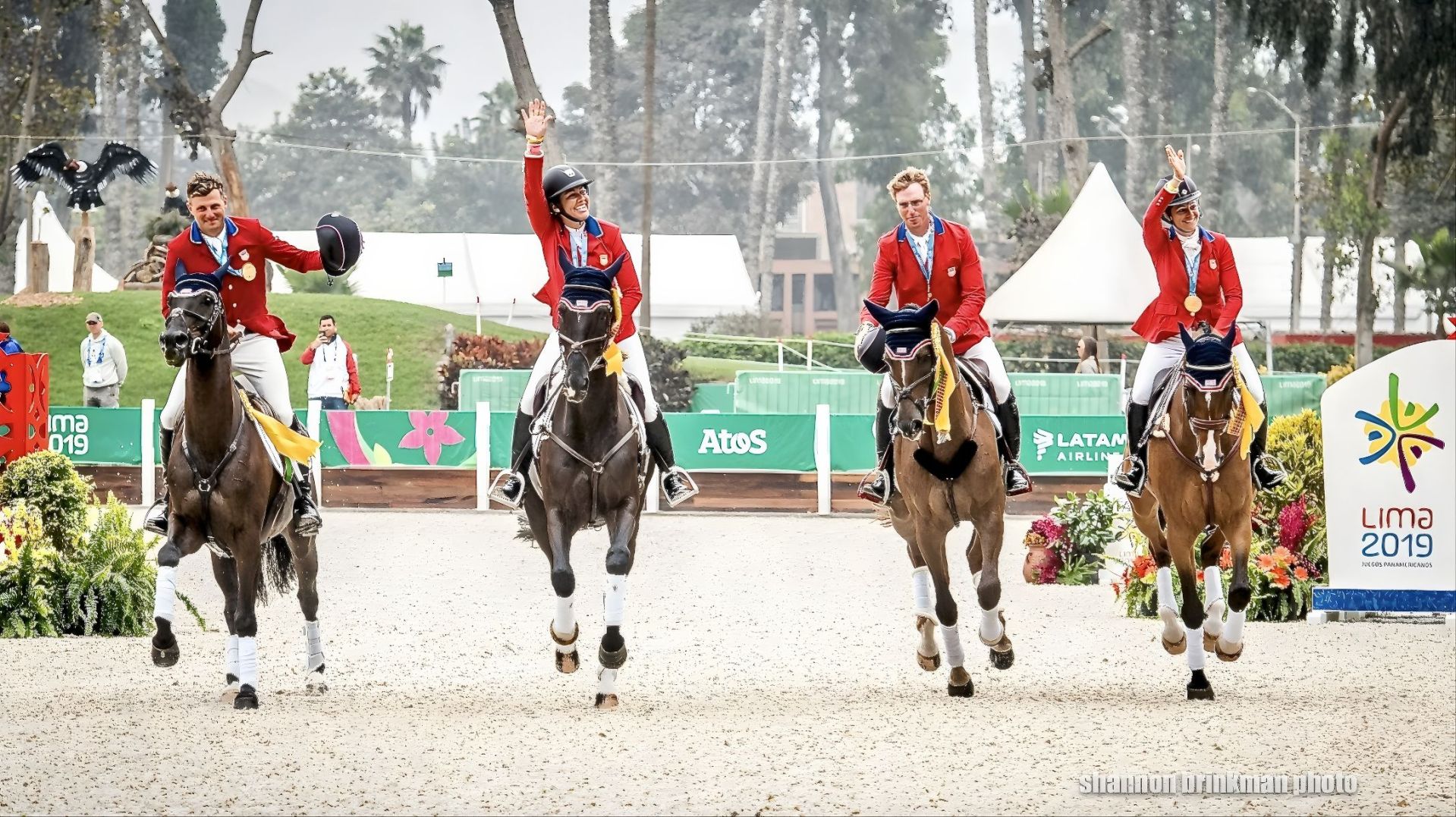
[29:05] So it was a wonderful introduction to a senior team environment. I’d been on a couple nations teams in the past, but those are, I don’t know, the pressure is just different. And we also needed… Why is the pressure different? Well, we were in a situation where we needed to win there to be qualified for the Olympic Games also. So basically, if we had bombed out there, then the Olympics wasn’t going to happen at all. And so for sure, there was more pressure there. That setup is a bit easier in that there were four team members with a drop score. So that was…
[29:42] I don’t know if it takes a pressure off, but at least you know you have a backup plan. But going into the games there, I had a wonderful horse called Star Witness. She was actually a sort of failed show hunter first, but fabulous on the flat. And she’s gone on to go through Grand Prix dressage as well.
[30:02] But she ended up fourth there in Lima. And that set me up very, very well, because I think it’s proof there. Were in a pressure situation that team selectors understand that you’re going to rise to the occasion rather than shrink from it. And I think without that experience, I would not have been selected for Tokyo. So when you travel around the world like this and you go to all of these venues, I mean, incredible experience, especially if you get to take the wife and the kids. Jess was pregnant when we went to Lima, and the Zika virus was pretty big, so she didn’t come there and then of course COVID pretty much killed everything when it came to the Olympic Games so unfortunately both of those trips really no one was able to come along much. And so other than that though so and then obviously during that particular time there wasn’t any kind of sightseeing or seeing the world you just get in and you get out. Tokyo was I mean in Lima was great we we were able to travel around a bit and see some of the other sports that were going on at the time. But yeah, our Tokyo experience was.
[31:13] Yeah, it’s, I mean, it’s a life-changing, biggest stage in the world, but at the same time, you’re so confined. You’re at your hotel, only the hotel, not able to go out from there. You’re cordoned off to a room for most days. You have daily testing, you know, COVID testing there. How many times did they test you? daily so yeah daily test and that that was to me it was probably the most taxing mentally aside from the stress from competing because you know if you happen to get a positive they’d pluck you from competition and then you’re in a construction trailer for the next two weeks you know so it’s like you set your entire life up to do this you’re finally here you’re finally in the competitive arena and then you could get plucked out the next day so that was like that was a lot i thought so So preparing for the Olympics, how do you prepare mentally and physically for that yourself, away from your horse? Yeah, you know, we’re lucky. We have quite a big business. We have 20, call it 25 horses, I would say, on a normal day. So I would be riding 10 to 12 probably per day. And then I do think biking is probably the best analogous exercise physically for me.
[32:32] Try not to get heavier, right? You just want lean muscle. I’m 6’3″, so don’t need to be any bulkier than that.
[32:41] So on the physical side, that mentally…
[32:46] Mentally that sort of thing is a challenge because we were away from home for almost a month we had two basically two weeks of quarantine in germany and then flew from germany over to tokyo and then we were there the more or less the week prior and then the week of competition.
[33:02] That’s the most challenging thing is that you’re going from a typical situation where you’re competing a whole bunch of different horses or riding a whole lot at home to now you’re traveling with one horse with only that horse to think about only that riding that you’re going to do that day and so occupying your mind in other ways can be challenging so that was the the biggest thing is trying not if a distraction is the right word but try and get as much computer work done or whatever it might be that’s no spare no no spare and and not even today there’s no spare isn’t Well, there could be. I didn’t have a spare, right? So there is the ability to have what they call a direct reserve. So if you happen to have two top horses, actually, the Pan Ams.
[33:50] I did have the luxury of that as that Star Witness was the primary and Van Diver, who actually went to the Tokyo Games, was the secondary. So if something had happened to her, he could have swapped in to that same team slot. But that only works up until the time that you’re hopping on the plane and you’re shipping over. So what makes you laugh yeah what makes me laugh that’s a great question i love sarcasm i love direct to the point yeah you got i mean you got to have humor in this game because if you’re if you’re dead serious all the time i think you’d be in a ward somewhere i think you have to i think you have to enjoy what you’re doing and find humor when things go wrong because they’re going to go wrong more than they’re going to go right, I would say. And what makes you angry?
[34:40] People that aren’t straight, if they’re not straight shooting, if they’re deceptive for sure, if they’re not. Yeah, I mean, I think the same thing with the horses that I don’t care if it’s good news, bad news. I’d rather hear it straight than have somebody beat around the bush to, you know, work around it some way. And if you could describe yourself in one word, Doug, what would it be? Pretty ambitious. I’m going to agree to that because I know you.
[35:15] So where’s your favorite competition? Great question. Favorite competition that I’ve ever been at or that we’re… No, yes, where you’ve competed at, certainly, that you’d love to go back to or you’re glad that it’s in the lineup. Yeah. I would say probably right now I would say Tryon still is our absolute favorite. It’s kind of a second home for us. and we were there probably 10 weeks a year. And it’s… Close to home? Close to home. And it feels like coming home. I mean, this is last year where… Driving in and you know one of the kids in the back oh it’s like we’re going home i’m like that’s true you’re you growing up here probably similar to them you know their perception will be very similar to what i had at the the usct it’s that they’ve grown up there and people are so accommodating easygoing that whole area the mountains is beautiful and so what do the kids do during the day while mom and dad are showing terrorize the world no no they’re good they’re um.
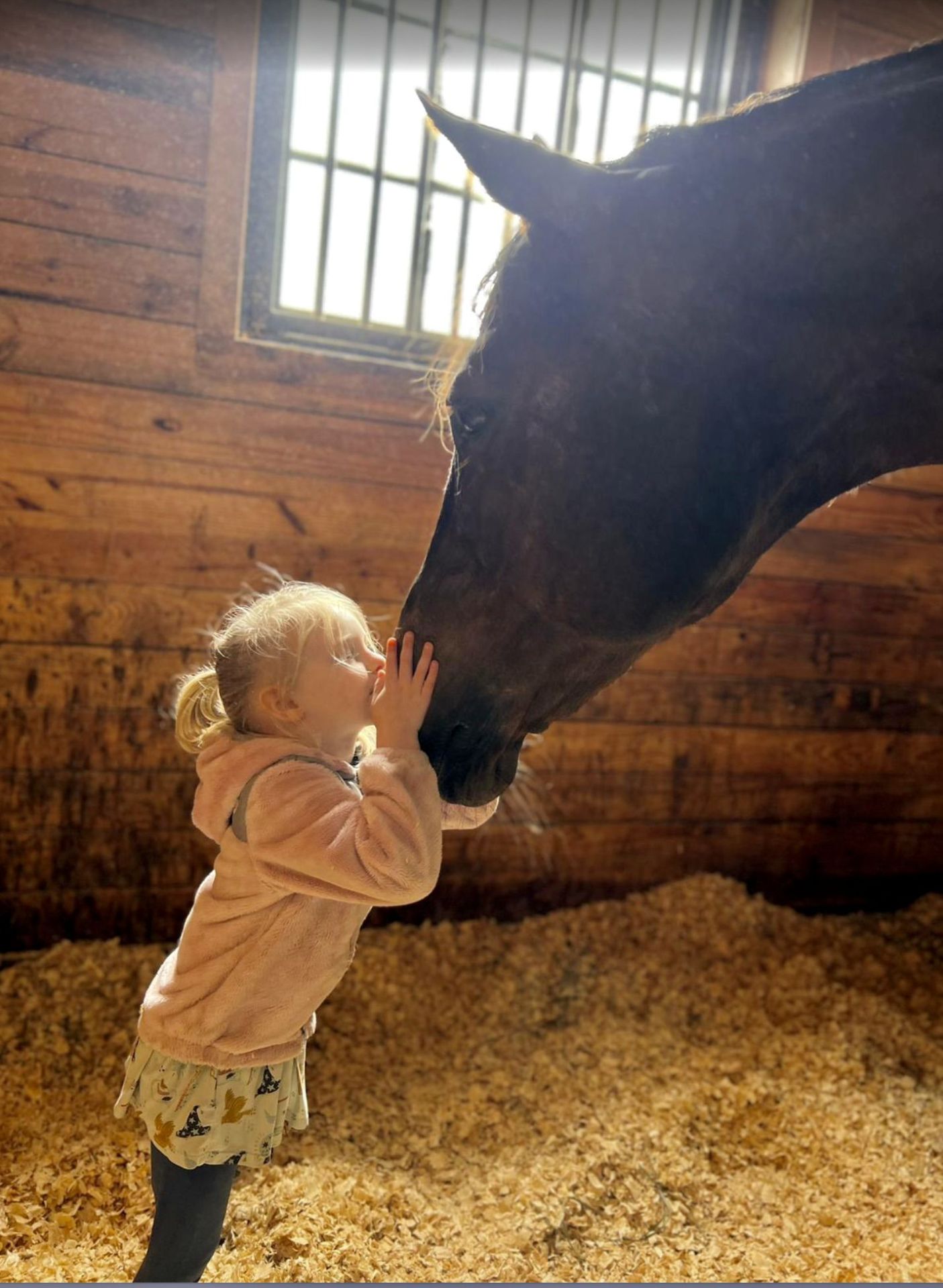
[36:20] You know abigail loves being around the horses so she’s 100 the treat girl so she’s walking around giving treats to everybody hanging out they’ll they’ll go from ring to ring trying’s great and that they have a sort of upper level that’s segmented off from the horses so it’s quite safe for them to be around so they might bring their scooters or borrow somebody’s dog that comes along and take them for walks and and then if we’re not super busy the option there to go down to the river or there’s i mean there’s so many outside activities you know if we have a free afternoon like a hike or whatever it might be just something a bit different try and get them so it’s not you’re at the show 24 7 you know we pride ourselves i think in being efficient in what we do and how we operate and we try to get everything done as quickly as we can in a, efficient matter that we can then go enjoy other opportunities in life i hate being less in the ring you know i want to be first in every time nothing annoys me more than an open gate and you know sitting there just nothing happening so all right to be serious here the falls the accidents yeah.
[37:35] How have you experienced that? It’s going to happen, but I’ve been very lucky. I think one of the things I was most proud of when we finally finished up my eventing career now is I never once had an ambulance ride away from an event. So in that way, I think without a doubt there’s luck involved. And I think what we’re talking about, selection, the horses, you’re not going to change your instincts. So if it’s not good, your health is worth far more than anything else. It’s not worth rotting. Any serious? Yeah, I mean, I had one that was, you know, my worst. I’ve been knocked out once. It’s…
[38:23] You know, it was a horse, it was a very odd situation, it was a horse that actually was coming back from EPM, and they actually think that potentially in his throat, when the EPM is a, what is it, a protozoa, something, but basically, they almost get half paralyzed, basically, and then you can treat them, and he was coming back and had ramped back up in his, this was his first competition back. But i think maybe back in his throat he didn’t have complete control and sort of cut off his air pipe and so i think this is just a best guess really is that he somehow cut off his oxygen supply and effectively passed out and um i just went down pelican scooped the footing and got knocked out and ridiculous my chin but yeah i mean that’s really the worst of it that i’ve had i’ve been very very lucky never to have a horse you know really seriously injured i mean there is stuff that’s going to happen it’s the nature of competition nature of anything in life right is that injuries will happen but i think if you can prepare yourself well enough that, the likelihood is low mistakes will happen but you know i try not to get wrapped up in them too quickly if something does happen obviously look back try and figure out if there was a causal you know something you could have seen earlier maybe that help it out but.
[39:52] If if you’ve done everything you can do it’s going to happen sometimes you’re going to fall down so here’s the question that everybody’s asking yeah why did you leave three-day and decide to go in to stadium, it’s been it’s been a long process so.
[40:12] I guess going back a bit, when in eventing itself, I did my first Grand Prix when I was 22. I had a horse that came to us that was bucking people off and jumping cross trails at the time. So he was quite a good horse. Perfect subject for the book. Yeah, exactly, right? So he finished up, did his first couple Grand Prixs, and then moved on. So that, without a doubt, piqued my interest. But again, it was quite early.
[40:40] I think it was 22 at the time and then was open to the idea of jumping but didn’t really have a string of horses obviously that would be in that realm, at the time of trying to get to international teams eventing and so as they came along our best horse right now is called Quintessence he’s I guess turned 14 now, we’ve had him since he was 4 and he initially came to us to event but as a six-year-old was just absolutely crazy careful and in the end probably would not have held up to the endurance needs of of eventing but i was very lucky um jane dudinsky who owned him at the time was open to us going to just jump him instead and so he actually went on to win the six-year-old finals and the seven-year-old finals And then he’s won a bunch of Grand Prix’s and was able to do my first five-star on him. And so with that opportunity, getting in the ring, jumping, you know, big tracks, it’s, it’s pretty appealing. It’s, um.
[41:50] It’s a different challenge. Eventing is, especially, say, on the cross-country side of it, the show jumping courses, they’re getting more technical, but that’s kind of definitely a newer and last couple years situation in the eventing world. But I think the intensity in a jumping ring is just sort of unrelenting.
[42:10] Yes, shorter duration, but every little change or mistake can filter down. And you know if you’re not super quick to fix it will make a big mess of things later on.
[42:22] Whereas on cross-country you have clumps of intensity followed by a long period of time to think about what’s happened so you have a water complex has four or five six elements whatever to it but you’ve 20 seconds of intense you know has to make it happen and then you’ve got 30 seconds of galloping to formulate your plan for the next so it’s a different challenge and since my interest was piqued and we had a very, you know, just a great horse with us, we started trying to figure out, okay, maybe we can do a bit more of this and with the kids now of an age that they’re traveling with and we would love to continue to be able to provide them with life experience that, you know, we would just expose them as much as we can. Cutting down on the travel schedule would be uh would be a massive help because doing both disciplines at a high level we were on the road 40 45 weeks a year and so we dial that back down we can be that was one of my questions yeah it’s just forget it it’s tons right yeah so we went from certainly north of 40 weeks a year on the road and now we can cut that back and, on a day-to-day yeah and on a day-to-day it’s it’s easier in the end and it’s not without a doubt not easier in the competitive arena and it’s not that it’s easier to.
[43:52] In your thought process in training the horses but eventing is especially the endurance aspect the galloping is is just a lot cross-country schooling you’re sort of doing the triathlon you’re doing all of this stuff trying to make make sure every minute is spoken for because there’s just so much those horses have to be a master of where this is far more focused on one thing and with that it allows just a lot more flexibility freedom in developing the horses and training them and you know our day-to-day is yeah it’s just it’s it’s a bit more straightforward at that point and so three day how long before you can do another event in other words you know the jumping has its own little rule of thumb you know how often you jump and show your horse.
[44:40] The the hard part with the eventing side is that you have say you have a top tier horse right you You have basically two five stars you could do per year, one in the spring and one in the fall. And then you have your lead up competitions and you’re pretty well locked into whatever that calendar is, is pretty much where you’re going to be. And so you would be competing every once, every two to three weeks, I would say in your lead up. But if you have a very well experienced horse, you might only show and you might only go to two or three competitions before that five star. A greener one one that’s coming up in in development they might see a few more for sure but i think um you know your young horse even in there your your most you’re doing a year is maybe 10 or 12 i would say competitions jumping side just be very mindful obviously that you’re not doing too too much we try to do kind of two on two or three off at that point, yes so there is a difference yeah yeah there’s a difference and it’s one of those things we’re still in all honesty still trying to figure it out trying to figure out how to do this better and.
[45:47] Maximize the ability of our horses and, With this new challenge, without a doubt, I’m trying to improve my riding as well. So you like it. Oh, love it. Love it. But it’s always been a goal of mine to be able to show up to any discipline and not be tagged as an outsider. Like I want to be proficient enough that I can be competitive with wherever we are going. I’ve heard you say that before. I think we’re finally getting there. It’s close. It’s not exactly where I want to be yet. But it’s getting better and that slight chip on your shoulder that you’re not quite good enough is motivating as anything. You need to get that out of your head. Do you have a mentor?
[46:30] You know, I’m very lucky to have a great group of people, not one specific person, I think, that I can call on on a frequent basis. And you know with that is, I’m just I think very lucky with that I always thought in development, even if you have the absolute best in the world and you were to train under that one person you’re never going to quite approach their skill set and I think a diversification of ideas is really helpful to draw from, and with that there’s something that can be learned from all of them and any discipline I mean it could be, polo it could be the western world it could be you’re going to pick up little tidbits of knowledge that will apply across the equestrian world that and so i saw a video the other day of you uh playing polo yeah it’s great fun so i want to know i could totally be addicted to that, i gotta hit the lottery first but i could totally do so who is behind you with a gopro no i was holding myself you were holding it yourself got a great so now i’m a bit of i’m a I’m a bit of a nerd with that when it comes to… And I hear you’re fearless. I don’t fearless. I take calculated risk.
[47:45] No, I’ve always been a bit of a nerd. And, you know, photo and video has been a passion of mine for a long time. But I’ve got a 3D camera that goes on basically a big old stick that is… Okay, so, but wait a minute. We’re talking polo here. Okay, we’re talking two reins. Yeah. We’re talking a whip. We’re talking about a mallet And now you’re talking about a stick with a camera on it Yeah, yeah I have to tell you, it was Academy Award winning And we’re going to show that film Yeah, no, I got both sets of reins We got four reins in the left hand and the stick with the camera And then, yeah, mallet in the right and off we go And so how did you do that day? I mean, first time on, I got to think it was pretty good I mean, it was a whole lot of fun I could see, Without a doubt, you could be addicted to that. I mean, it’s great fun. We’re very lucky. Alan Martinez, our friend, he’s a polo professional, and he was nice enough to let us ride some wonderful horses. And, you know, it’s just interesting talking to him about, again, how they would develop horses, you know, the younger ones there, where they pick and choose what games they do or how they’re going to play them. And it’s all the same. It’s all the same. Well, you sure look like you’ve done it before. I would never have guessed that you were on.
[49:08] All right, so let’s talk aircraft. Yeah. So you love to fly. Love to fly. And you have a plane. Yeah. And everybody’s been in it. Yeah. Jess was pregnant with Hudson, and we had, yeah, not just one. We had a number of couples saying, we really need to get an RV for the kids at the show. So we got a place to go, air condition, they can get away from the show, all that kind of thing. And at the same time jess’s father flies i had a number of friends in aiken that also did that were instrumental in sort of kicking me over to, you know take the plunge and really do it of course with the mechanical engineering degree i did a bunch of stuff with control systems for flight dynamics so.
[49:58] The that science side of it was appealing and i just always thought it would be financially, just not a possibility whatsoever but then we got looking into it and there’s a great little flight school in aiken it was super affordable at the time and we got looking at the plane and for the exact same money we’re gonna have to buy a truck and an rv you know travel trailer we could buy this plane and on a per mile basis it’s the same i mean i think we’re paying 36 cents a mile maybe and three times faster than driving so last year alone i think we saved 350 hours of driving, which is insane that’s insane so what it means to us to jess and i is like.
[50:45] We would have obviously cut back on where we went, what we did, but, you know, we have limited time available that we are free or offer, have an afternoon free that we could do stuff with the kids. And, you know, if we can, I mean, tomorrow we’re talking, we’re sitting here in Wellington, loving this, and I think we’re going to go to Key West tomorrow for walk around town and have some lunch and then fly back. It’s not an opportunity if we had to drive. And I understand the kids love it. Oh, yeah. Oh, absolutely love it. I heard they love the bumps Yeah, so they call it up and down So when we’re usually coming into land Because Jess absolutely hates it But the kids are obsessed Is that we’ll fly a little parabolic curve So that they’re weightless for a bit And they float the stuffies Oh, you don’t.
[51:31] So we kind of cruise up And we go nose over And they pop the stuffed animals up And the stuffies are floating around the plane And yeah That’s all they look for So you are fearless, okay. All right, so. But yeah, so the plane for us actually, you know, again, the trade-off was either maybe convenience of the show, but then we’re going to, one of us was going to have to get an extra driver of one way or another. Jess didn’t want to clean it. I didn’t want to maintain it. And, you know, time’s a thing that you can never get back in life. And a good friend of mine, Augie Vetterino, since passed, but he said these are time machines, and he was dead right like it’s I think the choice of again efficiently making use of the time and opportunity you have, the plane has been great and it’s a different interest or, distraction is the wrong word but.
[52:29] You can engage your brain in something other than horses, and I think that is incredibly useful. Well, your brain moves pretty fast from what I have learned about you. So I can see where you would just absolutely take this on and just love it. Just run with it. Yes. And as far as the bumps, I’ll get in the plane, but I don’t want to do the bumps. So but what it led you to is you live in the carolinas and uh we’ve had some horrible tragedy there this year so tell us how you got involved there yeah so another great friend of mine flies unfortunately my plane was down an annual so i i was out of commission but bob wall his name is he actually owned a really good horse called getaway that we rode in um, at Pucolo in Holland on the Nations Cup team and his daughter worked for us and rode with us for quite a long time, anyway so he was flying he’s got a Kodiak so it’s a turboprop single engine, but has a very sizable useful load so we can carry a lot of stuff and he had flown a bunch the day prior and called up and said would you join with to have another set of eyes on this because it’s a lot I think we did seven flights that day, going in and out but it’s it strikes you.
[53:50] There was an army of volunteers that made this all happen, but there were sort of pickup points on the east side of the mountains where the weather had not been quite so bad and had a line of cars coming in one side, had an army of volunteers that were weighing everything. So it could be a case of water you you know that might weigh eight pounds whatever so they’ll sharpie on eight eight on top and then on the pilot side we could walk in and say our plane can carry 1200 pounds currently and then they would palletize 1200 pounds worth of supplies, and bring it out there load it all up and then they had a just a big whiteboard of every local airport which there are countless i mean it’s it’s shocking people that are unfamiliar with flying especially on the east coast here you’ve got in a 25 mile radius probably six airports you could land in and so with that they had each airport and they weren’t damaged some were and some weren’t but the ones that were flyable that you could land in and you know they had a note in And the one particular one said, okay, the last thousand feet is all silt. You can’t use it, right? So if you know your plane’s specs and what you’re comfortable take off landing in distances, that sort of thing, you could choose to take it on or not, you know.
[55:14] Yeah, load up and figure out what airport needed what and, you know, make the trip out. And we had one caught wind basically of a farm that had 20 some odd horses there that all of their feed, hay, fencing, part of the barn was all missing.
[55:33] And they were completely stranded. The bridge that would access that was gone. And so we did make one trip down to Southern Pines, picked up 18 bales of hay, whatever it might be. and flew it back and commandeered a skydiving plane and had to do a low pass and pushed out the jump window. They said they lost the first two bales in the river, but after that they got the aim dialed in and horses were certainly happy to see that. And when you saw this, did you see people suffering and animals suffering? And did you get to see the dark side of all of this? To a point in the small airports that we went you know there are volunteers there and and of course you’re talking with these guys and they said you know every road is basically blocked in some way shape or form nearly every bridge is gone and so they said for what they had access to at the moment you know they could identify needs but we weren’t you know there were helicopters that were literally landing on the you know backyards of these people’s place from what we could see was kind of a thousand foot view that i mean it’s astounding the amount of damage and yeah it’s it’s it’s brutal but what does it look like now do you know we flew over a couple weeks ago and it’s still.
[56:57] Yeah we flew over we’re going jess’s family lives in nashville and we were on the tennessee side of the mountains and where typically it was kind of an s-shaped river that you could still see the amount of just it looks like it was clear cut you know across.
[57:14] And in the mountains themselves. It’s just, yeah, it’s evident. And it will be for years, I’m sure. It’s very sad because we were talking about hiking with kids. Chimney Rock was one of our favorite places to go. And, you know, that town’s pretty much wiped off the face right now. And so did you bring anybody back? Or did you run into any type of medical situation? Or you could… We did not. No, we did not. But, I mean, it did happen for sure. You get a lot of family time with the family on the road and it’s wonderful that they love to do everything but hudson he’s not into the horses yeah i don’t know that i was like or you don’t know oh no i mean he he likes him abigail would go down and just hang out in the barn for hours right where he’s going to probably be building his legos or practicing a soccer or golf or whatever it might be but i don’t know that i was that and i mean i was into it but I think I probably was more indifferent at his age as well.
[58:13] You know, the huge motivating factor for me was my sister beating me. And then it’s like, okay, now you’re like, you got to beat your sister. So then, then you have to get better. And then it starts to snowball at that point. So I don’t know. I’m not sure that that chapter is unwritten, whether, you know, I’ll jump in to it or not. I don’t know. So describe to us your bond with the horses and how important it is. Because of the challenges in their
[58:40] care, the partnership that you need so much in order to do the sport. Yeah, I think outwardly, often I think that horses are viewed as a vehicle or a piece of equipment that goes along with it. But I think at the very top… A long-established partnership will get you to both out of trouble and I think is incredibly important to your success and to both of your health as well. Do you have a horse that stands out in your mind more than most that you’ve had the opportunity to have, ride, show? Yeah, I mean, one that would still be with us right now would be the Quantum Leap. And so he’s, yeah, he’s done seven five stars, and he’s Abigail’s favorite. And so he’s got a home for life with us.
[59:29] Days of venting are over. He’s got a hawk that’s trying to fuse. He’s totally sound, but if you were to run for an 11-minute cross-country course, I think then it’s probably just too much to ask at this point for him. So he’s going to migrate over to the jumping side, and in a few years he might be Abigail’s horse to jump around herself, which I would love to see.
[59:53] So, with the three disciplines of three-day, do you miss that?
[1:00:00] And not even a little bit, not even a little bit, no, because, you know, I spent 20 some odd years, you know, with it and not to say that it, not to say that it gets old, but it, I mean, really, unless, you know, at the top end, there’s nothing like it for sure. But there’s so much that goes into building the next generation and we’ve for the past five or six years we try to have a supply of young horses coming so we try and buy a weanling a year or breed and that last six years or so has all been jumping blood and so now it’s you know we’ve got those guys started and that starts to get more and more exciting you know and that’s yeah i’m I’m very content, very happy with it. You know, don’t regret one minute of it, but I’m excited and motivated moving forward. Toughest cross-country course that you’ve ever competed in.
[1:01:01] Yeah, I guess each year they change. Did you go to Mill Street? No, I didn’t go to Mill Street. Yeah, I mean, I guess I’d have to say Burley because I didn’t finish it. I did fall there. But I don’t know. There’s been, you know, a five-star of any location is an extreme challenge. Each one has its own flavor of what makes it intense. But I don’t know that you could identify just one particular course as the one that was the most challenging. Because I think in the end, at five-star, you’re going to need a bit of luck, too. And you’re going to get in a sticky situation regardless where you’re at. And relying on, again, that partnership with the horses to get you out. Out of the three, which did you like the most? Cross-country, dressage, stadium? They’re all different. It’s like picking your favorite kid. Can’t do that. You can’t do that. I can’t do that. That won’t work. And it all depends on the horse that you’re riding, too. I mean, some have, you know, just excel in one versus the other. And, of course, the one that’s extremely good in that phase, well, that’s a whole lot of fun. And would you say that your childhood dreams have been met?
[1:02:03] I mean, yeah, for the most part. I mean, it’s, I think you’re, I guess as a child, you always thought it would be great to go to the Olympic Games, but I never framed it in a way in which it was, if I didn’t go, I would have been a failure. You know i think it’s a in development of forces as with everything in life i think it’s process oriented i think if the process is in place that will bring out an elite level competitor then hopefully any results will soon follow so you know if i got there great and if i didn’t i would have been okay too but having achieved that goal so far has been wonderful and now with the open or in the jumping side of it, I would love to replicate that in the jumping arena as well. And you’re on your way. Yeah, try. What is your most treasured horse-related possession? I would have to say Debbie and Kevin Crowley, who owned Van Diver with us, they actually bred him as well. So it was a really special story that he had the opportunity to represent the U.S. With them because, again, preconception they were there. But they put together, after the Olympic Games, a shadow box. it’s I mean it must be.
[1:03:18] Four by five, you know, and five inches deep, but it has everything from a, you know, bridal numbers to the, one of the shoes that Quinn was wearing and, you know, a bunch of photos. So that, yeah, that probably still would, would rank at the top. The other, I had a horse called Crown Talisman some years prior. We bought him, again, a difficult horse. So made a barter deal and bought him for a dollar, and he ended up going on to a top placing in France, and then was bought over in Europe, and he really set our life up. From the sale of that horse, we were able to buy the farm that we’re at, and then work to build it all to where it is today.
[1:04:01] I’ve got a painting of his, and his two shoes as well, that mean a lot. So Doug, tell me about the operation and the Carolinas, where it’s at, what your day-to-day stuff what you do extremely lucky have i think we mentioned earlier about moving south i was initially grew up in new jersey and jess was in nashville and we basically picked the carolinas off the map and rented for a year and change on the southeast side of raleigh we live now on the north side of durham love the area but location of the farm has just been absolutely We’re 25 minutes from the campus of Duke and 35 to UNC and maybe 40 to… And the city is? We live in a little town called Rougemont, just north of Hillsborough. And, yeah, 26 stalls and a full operation, everything from hunters to jumpers at this point. We have, I think, one remaining event rider as well.
[1:05:01] And our, you know, normal day, obviously, just unfortunately, it’s the school bus driver at the moment dropping the kids off. But we try to get most of our riding done in the morning and teaching and got a number of clients that would be either college students or professionals that are somehow into health care or whatever it might be in the area. And then we’ve got another group of clients that would meet us at shows. So we prepare the horses at home and then they’ll meet us on the road. So if i was a client coming to you and i wanted to know what was going to go on at the horse show you know when i had to be there what the deal was yeah so we we you know we’re trying to always build a you know a better system as we go but right now we’ve got a whatsapp group that would join in with all the clients that are on the road with us at that point so every evening we have a total you know provisional schedule of course things may change a bit through the day if one ring gets slowed up or whatever it might be but we’ll have a schedule listed there and, a game plan to attack it and if we’ve got a conflict and jess and i are here we might split up or might have to you know move things around shuffle them and then once it gets rolling it’s a pretty low-key easy environment that we like to operate and certainly no drama at all like we have very little tolerance for that so how about sleep sleep yeah i wish there was always more but.
[1:06:24] But yeah we we tend to operate as as efficiently as we can and and try to make the most so everybody has their opportunity to succeed and what is your early morning like early to you in the horse industry we know what early is well i mean our kids um, hudson’s usually up at about 5 15 to 5 30 sometimes earlier so he’s he’s off in our alarm clock as far as show mornings you know for the most part first in the ring isn’t till about eight so seldom you know we haven’t got a couple hunters so if that’s the case maybe they do need to get out a bit before so that might make an earlier morning but for the most part you know if we’re on by 7 30 that’s probably a typical typical thing so how does your client feel that is the only three dayer.
[1:07:17] He’s pretty chill, pretty easygoing. Goes to Elon, as a horse did, his first advanced this last year.
[1:07:25] And, you know, the horse needed or benefited from some bit more experience jumping. So he had a semester abroad in the fall, and we actually took him jumping a bit. So he had stepped up to the meter 30s and got a lot more mileage there, which will, without a doubt, translate into what he’s looking to accomplish. So he actually gets a little bit of the best of both worlds then, because he can go do a three-day vending, but he can get his time in the ring here at any show on the road that you guys are working at. And that’s kind of how we’ve operated the last, call it, five years with the event horses. They’d often came with us and jumped. And preparing them at the shows, the jumper shows for the events, we’ve found a very efficient way to make that work. And I think it’s advantageous because the environment at the jumper show or what WEF here is chaotic. It’s a 10 ring circus. But, you know, that’s something that the event horses seldom see often in their upbringing. They’re at very small venues with not a lot going on. And then all of a sudden they get to where it really counts. And there is a lot of atmosphere. So having spent more time in a bigger environment is just a huge asset, I think, for the event horses. Absolutely, I agree to that. What advice would you give to a young person of trying to achieve their goals, you know, where they want to go, whether it’s your children, your clients, clients’ children? Try and use it for myself today, too. Never sell yourself short.
[1:08:55] And don’t be afraid to make known a big ambition that.
[1:09:01] For yourself and and just don’t just hold it in right let people know what it is you’re looking to accomplish because i think the more people that are out there that understand what you’re aiming for even if it does seem outlandish they’re going to tend to support you help you and, in the end their network will also then help you but i think if it’s not outwardly projected, that you’re never going to receive the help that you could have had and just keep fighting for it That’s great. And don’t lose your desire. Absolutely. But let it be known what you’re looking for. Great. And where do you go to hunt for your horses? You know more often than not they tend to find us I don’t know we do.
[1:09:49] Because I think we’ve established a very long track record of developing horses we do get in touch with breeders quite often most of the horses that we have or the ones that I’ve been most successful with have all been domestically bred, and with that relationship with a breeder we often would then go back to them and that trust and relationship is established and, you know, keep going back. So it’s a breeder? Well, we have a number that we have worked with, but yeah, yeah, one, yeah. And do you have a personal motto, a catchphrase that you kind of live by each day or?
[1:10:32] What doesn’t kill you will only make you stronger. Yeah, it’s a good one, huh? And what’s your biggest love of the sport?
[1:10:40] It’s just a relationship with the horses. When they finally, when that light bulb finally goes off and they finally get it, and then the horses end up getting the recognition that I think they often deserve but don’t receive, that’s always probably the best part. And where do you think the industry is going?
[1:11:00] It’s a big challenge. It’s a big challenge. Because I think it’s…
[1:11:06] We’re in a state, in society of instant gratification, and if you can pay enough to get in the door and go with it, that is often the path that people would like to choose. And I think with horses, a timeline never works. And especially if you’re looking to compete at a, it doesn’t matter at what height, but have a certain level of proficiency, there’s just a lot of time and effort and dedication that’s required to get there where, straight off just trying to buy it is not going to work and so with that i think you’re starting, to see a you know a smaller and smaller number of true horsemen that are there to understand the horses and try and figure it out and then maybe you know at some point then have the experience than to help others do the same. And I think that aspect is a huge challenge. And do you think our Olympic Games will continue?
[1:12:07] I personally think that jumping will stay the longest. But I think eventing, I know they say it’s in for LA. I’d be shocked if it’s in after that. And the reason being, you feel this way? I think it’s all unfairly so. you know spent my last 10 years on safety committees for the usca and helping as best we can with the frangible technologies and safety innovations but i think they’re quickly getting wrapped up into welfare concerns and wrapped up similar to what racing is seeing.
[1:12:47] I think the, you know, the jumping side is in many ways easier on the horse’s bodies. And not that you would never have an injury, but certainly the severity is frequently less.
[1:13:03] And so, and the jumping is just a better, more packageable sport for somebody walking off the street. They can come in for two hours, pretty easy to understand what’s happening. They can walk away knowing the winner and that that i think is a huge challenge with, with both straight dressage and then also with the eventing is that it’s it’s often difficult to tell what’s what’s really happening i mean the educated fan base for sure will completely understand and enjoy it but for commercialization i think that’s a big challenge and with the land concerns i mean that’s the other thing on especially on the eventing side jumping and dressage not near as challenging i don’t think but you know a cross-country course just in a crazy amount of time money effort resource heavy for something that’ll run one day it’s you know i could see an olympic games dropping that pretty quickly and where would you say our biggest improvement in the industry is needed.
[1:14:02] Some sort of, and we do try our best to do it, but if you, you know, the base of the kid that doesn’t have the resources that shows talent and shows ability and drive, I think support for those sort of the next generation of top trainers, you know, that’s the biggest challenge right now, I think is, you know, there’s, I mean, I would not, as a kid in how I grew up, we were very lucky to have the knowledge base. to draw from. But if I didn’t have, you know, if my mom wasn’t who she was and didn’t understand what she understood, there’s no way I would be in the position I’m in now because we could never have afforded the training required. I have a question about your mom. So she had to recuse or decided to recuse herself as being an Olympic judge when you competed. How did that work in the family. Yeah, it was okay actually, because she, generally speaking, judges are only to judge one Olympic Games. She had actually already done two, so she’s already an outlier in that regard. So.
[1:15:13] While the recusal’s there, she had already done more than just about anybody. She’s judged at every five-star in the world. Was she disappointed? No. Probably elated that you’re there. Exactly. She’s already done it twice. So it’s, you know. And so you’ve talked about a change that could be made. And yes, I see that too. There’s so many kids with talent, but no money. Yeah. So hard. And this is, it’s very, very hard. So if so. You know, and the thing is no money, you know, with the talent, the hardest thing, it’s a bit chicken to the egg, right? You have to get in the ring to get experience to then warrant, you know, the support or, you know, outside support that’s going to come follow you and support you. But, you know, even that person, I would say decades ago could find a pretty inexpensive young horse and give it a shot. And that’s becoming increasingly challenging. And how hard is it to find help it’s still pretty hard it’s still pretty hard but um you know the good ones we’re very very lucky right now we’ve got a great group that’s with us and i think the area we live just north of durham north carolina is a wonderful area because there’s a huge influx of, you know young talent and.
[1:16:34] And we’re at like a 50-50, I think, for every two that we hire, probably one works out. But that’s probably about right. That’s true. That’s absolutely true. So if you didn’t do this, Tuck, and I know you talked early on that you might have gone into engineering. Yeah. Would you still do that if you weren’t doing this today? I mean, at this stage, I’d probably somehow go into flying. I don’t know in what form. I thought you’d say that. I don’t know in what form exactly, but I’d probably be flying in some other small business ideas. I don’t know. I don’t know exactly. Any regrets? Anything you’d like to change?
[1:17:13] Not yet. Not yet. That’s a good thing. Not yet. And are we satisfied with two children? Oh, yeah. Yeah. Two is a perfect number. Three, we’d have to get the bigger car, the bigger plane. That’s right. It would change everything, right? Yes, yes. So what’s on the horizon for you? Well, we’re lucky enough to have three international jumpers at the moment. And so at this stage, I’m looking to replicate the pipeline and eventual success in eventing. I’m trying to replicate that now to jump. And…
[1:17:51] So I feel like I’m still in the initial phases of just getting honestly, proficient and competitive in the ring, you know, and, and with this group of two super talented horses that have gone through five star now, but you know, in looking five years down the line, we’ve got some exceptional young ones coming and everything learned. It’s an iterative process, right? So every, you get to the top of the first horse and then, you know, you’re going to make mistakes with that first one that you fixed for the second and third, fourth, fifth, and I should build a better mousetrap every time up. So if in the next couple years I could, you know, take a shot at a Nations Cup team or, you know, something along those lines, I would love that. And long-term, yeah, I would love to represent the U.S. on a big stage again. And your biggest challenge right now, in order to try to do that, is what?
[1:18:42] Financial side’s really difficult. You know, it’s, you know, having the ability to both develop or acquire talented horses is just a massive financial undertaking plus hard to find and hard to find even if you have the money right so, yeah i mean that’s that’s the biggest challenge is finding developing partnerships and you know support that could join the journey and and join in to hopefully go to you know the best places in the world you know it’s uh it’s a it’s a wild ride but it’s it’s one that we’re you know looking obviously to continue to develop further a client who aspires to do this yeah comes to you got a little bit of talent but yet they’re you know long way to go how do you proceed with them and what do you ask them to do at that moment i mean i guess it really depends upon what kind of horse they We have and so forth. What are their goals? Their goals being to be an international competitor? Mm-hmm.
[1:19:49] I think if they’ve got the drive and the ambition, they’ve got to, in the end, ride as many horses as possible, many different types as possible, because I think they’re having the diversity and experience will help you tremendously in the arena, because even if you know you’re one horse, like the back of your hand, there’s going to be a situation where it might be outside of the scope of what you’ve experienced to this point, and maybe you can draw from another experience you had on another horse. And in a professional aspect, you’ve got to be able to get on any horse and figure them out quickly and be able to help, you know, whomever owns or rides that horse, how to work with them better. So that’s a big, I mean, that’s a massive challenge and one I think is, you know, if you have to be critical of the industry as a whole, I think there’s not that many people that could get on any type and honestly help them in a short order. What do you think the hardest thing about learning to ride is? I know you got to think back on this back in the day, right?
[1:20:57] That’s a bit, you can’t teach feel, right? So it’s one of the things that’s only going to be developed through time and effort and energy and some natural talent, of course, right? But yeah, the time required to really acquire that knowledge base that you can go back on is just tremendous. And if you’re doing a once a week lesson, it’s not going to do it. you know i mean it’s you can that’s true you can certainly improve without doubt but if you really want to be the best you’ve got to be living in the saddle well you both have incredible family support i mean our short period of time that we spent with you in the summer it’s amazing everybody’s you know got their own situation but they’re all driven and they all have desire they’ve all got great stories great stories lots of fun to be with and you guys travel all together. I mean, do you get the opportunity to see your sister competing or do you compete at the same places or? We have in the past, but those opportunities now are going to be far less frequent because she’s purely eventing. She doesn’t jump at all. And so now if I don’t have any event horses, that’s going to be a lot more challenging to see her competing. But for sure, we grew up showing together and what about jess she’s left the eventing world as well yeah uh-huh yeah okay yeah right now just with the kids in school it’s been pretty challenging.
[1:22:27] Yes how do you who’s teaching them on the road yeah it what oh everybody that’s home right generally speaking we’ll take a whole probably large percentage on every trip we do take so there’d be a handful that are home and just now with the kids in school primarily will be home more frequently than not. And so she’s able to cover that time frame that we’re there. So what do you want the world to know about Doug Payne? Yeah, that’s a wonderful question. I can answer that for you. I don’t have a great answer for you. I think it’s…
[1:23:04] Yeah, I guess the biggest thing would be it’s through just a tremendous amount of hard work and dedication that I feel like we’re finally getting there, but it’s still a long way to go. I think I would answer that as don’t look over your shoulder because I’m right behind you. I like that.
[1:23:25] That’s very good. I want to thank you, Doug, so much for sharing your time today and traveling all this way. I hope you have a great show this next week and have a great time in Key West. I want to hear all about it. Yeah, absolutely. So, thank you, my friend. Thank you very much.
[1:23:39] Thank you for watching today. I hope you enjoyed this segment as much as I did. I learned a little bit more about my friend Doug and I can’t wait to see what he conquers next.
[1:23:49] So stay tuned and there’ll be a whole lot more coming.
Special Thank You
Doug Payne
Jessica Payne
Holly Payne
Joan Hampf
Jill Martin
Paul Valliere
Deyson Ortiz
Audrey Rodriguez
Champe Barton
Sara Kozumplik
Nancy Lepine
Karen Karlin
Sharon MacDonald
John Michael Bonadonna
GiGi Cormio
Miguel Biscaglia
Juan Manuel Espinoza
The National Polo Center
7th Chucker
Sam Rosenberg, Coastal Smart Tech Services
Wendy Gutfarb
Denise Waller, Ewing Optical
Andrson Kool Air
Susan Ruben, Beyond The Barn
Whitlock Installations
Buddy Rivas, BatteriesPlus.com
Shine & Blinds
Luke Krcil, Sun Healthy Home
Xenia Howard, Michael Angelo Salon
Vision Salon
Lili Hernandez
Jennifer Booker
Pat Morris
Maristany Chiropractic
Dr. Spencer Shore, USA Sports Medicine
Tony Cabrales
Elizabeth Tringali, Tringali Vibrant Health
Violetta Cromer
Blackmajic Design
Cannon USA
Sennheiser
Sony
Artlist.io
B&H Photo Video Pro Audio
3 Natives Wellington
Dan Reed, Dandy Products, Inc.
Dr Mitchell A. Josephs, D.D.S.,P.A.
Hampton Inn & Suites Wellington, FL
Photo Credits:
Doug Payne
Jessica Payne
Joan Hampf
Payne Family Archives
HollyPayne.com
Anne Hoover Photography
Shannon Brinkman
Jill Martin
Nancy Jaffer
Susan J Stickle Photography
Jumper Nation
HA Strohmeyer
USET Foundation
The Jimmy Wofford Family
Hampf Family Archives
Payne Equestrain
Charles Owen Helmets
French Broad Chocolate
Garrett Mitchell
usequestrian.org